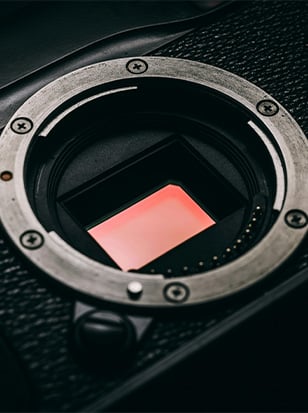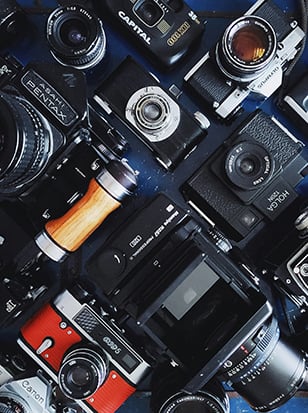
Here’s how to kit out your Canon, Nikon or Pentax DSLR with the best DSLR lenses – we’ve picked a selection of what we think are the top lenses for DSLR users. With a mix of focal lengths, lens types and price points, these are the DSLR lenses that have impressed our team the most. Whether you’re looking for an affordable telephoto, a premium wide-angle zoom, a travel-friendly lens or something else entirely, we will be able to help.
There are fewer lenses available for DSLRs than there used to be, with Canon and Nikon shifting focus to their mirrorless systems, but DSLR users still have plenty of excellent options, whether they’re out photographing landscapes or in the studio shooting portraits.
This guide isn’t a full, comprehensive guide to all the lenses still available for all the DSLR systems – these are simply a selection of lenses that we think are worth your attention. We’ve split the guide up by lens mount to make it easier to navigate, and have aimed to include lenses at a range of price points. So, let’s take a closer look.
Best Canon EF Lenses
While it may not see as many new lenses produced as it did in its heyday, you can’t go wrong with the brilliant Canon EF mount. Having been steadily populated with lenses of all shapes and sizes over many years, EF-mount is now a system you could spend a happy photo-taking lifetime on – and thanks to the popularity of EOS DSLRs in filmmaking, there are plenty of great video lenses, too. Here are just a few of our top picks.

Pros:
- Highly affordable
- All-purpose focal length
- Fast maximum aperture
Cons:
- Plastic build
- Not fully weather sealed
Lightweight, dependable, affordable – the Canon EF 50mm f1.8 STM is perhaps the ur-example of a “nifty fifty” lens. This is a term used to refer to an affordable lens in the all-purpose focal length of 50mm (or thereabouts), and there’s a case to be made that a lens in this format is a much better “starter” lens than the kinds of kit zooms that are normally shipped with entry-level cameras.
With a fast maximum aperture, this lens lets you keep shooting when the light gets low, and is also great for producing images with a shallow depth of field, aided by its seven-bladed aperture that produces beautiful bokeh. While it’s a full-frame lens, it also pairs well with Canon’s APS-C DSLRs; when mounted on one of these, it delivers an equivalent focal length of 80mm, making it ideal for portraiture.

Pros:
- Impressively affordable for a telezoom
- Usefully broad equivalent focal range
- Fast focusing thanks to stepping motor
- 3.5-stop stabilisation
Cons:
- APS-C (EF-S) only
- Not weather-sealed
This is an EF-S lens, meaning it's designed specifically for Canon's smaller and more affordable APS-C DSLRs such as the EOS 2000D. It provides an equivalent focal range of 88-400mm in full-frame terms, meaning it's a solid budget-friendly option for photographing wildlife and sports on smaller, beginner-friendly Canon DSLRs.
Thanks to its sophisticated Image Stabilisation (IS) system, which provides up to 3.5 stops of effective compensation, this is an easy lens to use handheld. It's impressively lightweight for a telezoom at 375g, and it benefits from the addition of a UD (Ultra-low Dispersion) glass element and Super Spectra lens coatings to deliver crisp, sharp images. If you're using a beginner DSLR and looking for your first lens upgrade, we'd strongly recommend this versatile, fast-focusing optic.

Pros:
- Stunning optical performance
- Focal length is perfect for documentary imagery
- L-series build with weather-sealing
Cons:
- Professional-level price
Canon’s L-series lenses are designed for professionals, inside and out. What this means is that on the inside they boast sophisticated optical designs, optimised to produce images of pitch-perfect sharpness right out to the corners of images. And on the outside, they are tough and weather-sealed, built to withstand the kinds of rigorous outdoor use that professional photographers and videographers will put them through.
And so it is with the Canon EF 35mm f1.4L II USM. This brilliant wide-angle prime boasts high-performance lens coatings for superior light transmission, and offers terrific low-light performance thanks to its large maximum aperture. The 35mm focal length makes it great for documentary photography, with a frame that’s broad without being distorted. Wedding and event photographers will also find this to be a handy lens, ideal for group shots. Its hardy build also means that you don’t need to worry about a little rainfall. It’s priced at the professional level, but as far as we’re concerned it still provides exceptional value for money.
Best Nikon F Lenses
The Nikon F system has a clutch of dazzling lenses available, whether you’re a committed enthusiast with a big budget or you’re just starting out. It’s worth browsing the full range in detail to get a sense of what’s on offer, but here to get you started are some particular standouts that our team recommends…

Pros:
- Impressively consistent image quality
- Constant F4 aperture throughout zoom range
- VR stabilisation provides 3.5 stops of compensation
Cons:
- Some may hanker for F2.8
A popular full-frame kit zoom, the Nikon 24-120mm f4 G AF-S ED VR is an excellent, do-it-all lens that runs the gamut from wide-angle to telephoto, with a constant aperture of F4 running through the whole lot. Sure, pros would prefer F2.8, but that's how this lens stays lightweight and relatively affordable, and its high optical performance can't be disputed. Image quality is excellent throughout the zoom and aperture ranges, making for crisp, sharp, punchy images.
The lens also includes Nikon's VR (Vibration Reduction) II system, which provides up to 3.5 stops of effective compensation for shake-free handheld shooting. Autofocus is powered by Nikon's Silent Wave Motor (SWM), ensuring fast, noise-free and accurate focusing. The sophisticated optical construction includes two Extra-low Dispersion (ED) elements to correct for aberrations, and the elements have been treated with Nano Crystal Coat to eliminate reflections.
Essentially, if you want a capable day-to-day lens for full-frame Nikon DSLRs like the D850, one that will handle just about any shooting situation, we'd say pick this one.

Pros:
- Stunning corner-to-corner sharpness
- Moisture-resistant build
- Fast, quiet autofocusing
- Can’t take screw-on filters (but is compatible with Lee SW150 system)
A dazzling premium landscape lens, the Nikon 14-24mm f2.8 G AF-S ED delivers the kind of sharpness that pro shooters are looking for. With a sophisticated optical design, the 14-24mm lens maintains sharpness and quality right into the corners of images, letting you fill the frame with stunning vistas. Its constant aperture of f/2.8 means you can keep working at any focal length even when the light gets low, and the outer construction of the lens is moisture-resistant for outdoor use.
As it has a bulbous front element, this lens can’t take screw-on filters – however, it is compatible with the Lee Filters SW150 system, which is good news for landscape shooters who want to use NDs for long exposures, or ND Grads to control bright skies. It’s not a cheap lens, but it’ll prove its value many times over.

Pros:
- Silent Wave Motor autofocus
- Wide perspective
- Large aperture produces beautiful bokeh
Cons:
- Build is plastic rather than metal
A premium wide-angle prime, the Nikon 20mm f1.8G AF-S NIKKOR ED boasts plenty of features that make it well-suited to video as well as stills. For a starter there’s that vlog-friendly focal length, nice and wide, but there’s also the Silent Wave Motor autofocus system. Not only is this system quick, but it’s also (as the name implies) practically silent, meaning your videos won’t have their audio overwhelmed by whirring focusing motors.
The maximum aperture of f/1.8 gives you plenty of latitude for shallow depth of field, and we were particularly impressed by the rich quality of the bokeh in out-of-focus areas that this lens could produce. A sophisticated design of 13 elements in 11 groups ensures that image sharpness is high, with punchy contrast and excellent control of distortion and aberrations.
Best Pentax K Lenses
Pentax is still flying the DSLR flag, unlike other manufacturers, and has still been producing new cameras for its K-mount system in recent years. One thing the manufacturer is particularly known for is its extensive weather-sealing, ensuring its cameras and lenses are made for the rough outdoors – look for the “AW” (All Weather) acronym if you want a lens that is equipped in this way.

Pros:
- Weather-resistant build
- Focus Clamp functionality locks down focal point
- Constant f/2.8 aperture
- Quick-Shift Focus lets you quickly swap to manual focusing
Cons:
- Professional price
For Pentax K-mount DSLR users who want the best of the best, this wide-angle zoom will admirably fit the bill. The Pentax 11-18mm f2.8 HD DA* ED DC AW Lens (with a zoom range equivalent to 17mm to 27.5mm in 35mm format) is a terrific entry Pentax’s premium Star series, boasting a large constant f/2.8 aperture and an optical design that delivers high-resolution, high-contrast images from edge to edge, with no blurring or distortion. The body is also dustproof and weather-resistant to match Pentax DSLRs, ensuring the lens is perfect for outdoor use.
With a high-grade, multi-layer HD Coating to reduce reflections, a unique Focus Clamp Mechanism that completely locks down the focal point, and smooth focusing operation thanks to the DC motor, this is a lens that’s built to impress in all areas. The Focus Clamp also offers some useful extra features for outdoor shooting, such as space for wrapping heating wires round the lens barrel to prevent its inner workings from being affected by condensation, and there’s also a Quick-Shift Focus System for quickly switching to manual focus operation when you need to. This is a superb lens for Pentax K-mount.

Pros:
- Super-lightweight build
- High-grade coatings reduce reflections
- Aperture ring
Cons:
- Autofocus drive can be noisy
Another superb optic for Pentax shooters, the Pentax 35mm f2 HD FA’s optical elements have been treated with a high-grade, multi-layer coating in order to produce high-contrast images that are sharp from edge to edge and free from flare and ghosting. The lens has also been treated with Pentax’s stain-resistant SP Coating, keeping its front element smear-free and making the optic more useful for outdoor work.
The exterior design of the Pentax 35mm f2 HD FA has been revamped to be more in line with Pentax’s latest DSLRs, mirroring that of DA- and D FA-series lenses. It provides a 35mm field of view when mounted on a full-frame camera and 53.5mm when attached to an APS-C DSLR, and it also has a minimum focusing distance of 0.3m, allowing you to get nice and close to your subjects. Weighing just 193g, the lens is perfect for travel and exploring, designed to be extremely compact and easy to bring to wherever your images take you. Explore your Pentax K-mount possibilities with this sophisticated, affordable prime lens.
Best Multi-Mount Lenses
Finally, we’re rounding out this guide with a selection of lenses that are available for multiple different systems. DSLR mounts have been open to third-party manufacturers for a long time, and so we’ve seen plenty of terrific lenses arrive for these systems, from affordable budget options to high-end optics designed for professionals. Here are a few of our team’s favourites…

Pros:
- Weather-sealed build
- Exceptional sharpness even wide-open
- Constant F2.8 aperture
Cons:
- Large and hefty
- Cannot take front-mounted filters
Fits: Canon EF, Nikon F
If you're looking for a landscape lens for your Canon or Nikon DSLR, the Sigma 14-24mm f2.8 DG HSM Art is available in both fits. A high-quality wide zoom, the lens sits in Sigma's Art range, which consists of lenses that prioritise optical quality and character above all else. As such, the sharpness and crispness of images from this lens are absolutely jaw-dropping, putting many competitors to shame. Even when used at its widest aperture setting, the Sigma lens still delivers.
As is fairly common with wide zooms of this type, the Sigma 14-24mm f2.8 DG HSM Art can't take front-mounted screw-on filters; its front element is too bulbous. This means if you want to use NDs or polarisers, you'll need an alternative arrangement, such as a square filter holder or drop-in filters.

Pros:
- Durable, splash-proof construction
- Optical Stabiliser for hand-held use
- Excellent handling, optimised for speed
Cons:
- Canon version is more expensive
- Necessarily big and heavy
Fits: Nikon F, Canon EF
Shooting sports on full-frame DSLRs? The Sigma 500mm f4 SPORT DG OS HSM is a superb choice, undercutting native telephoto primes for both Canon and Nikon on price (particularly Nikon), and delivering sumptuous image quality alongside a build that is fully optimised for speed. Autofocus is lightning-fast, and the controls and ergonomics have been cleverly thought through to make the lens as intuitive and fast to use as possible.
A 500mm focal length is obviously quite particular, and there's none of the flexibility of a zoom lens here. However, the crisp image quality of this prime lens is beyond reproach, and with top-level optical performance, it's capable of capturing absolutely stunning action shots. It's a weighty lens, but this is just an inevitable factor for lenses of this type, and it features a tripod/monopod mounting ring for extra stability should you need it.
FAQs
Can I use any lens with my DSLR camera?
Not all lenses are compatible with every DSLR camera. It depends on the camera's mount type; Canon, Nikon, and Sony DSLRs each have their own mounts, so it’s essential to check if a lens is designed for your camera. Some third-party manufacturers like Sigma and Tamron offer lenses for multiple mounts, making them a versatile option.
What is the difference between EF and EF-S lenses?
EF lenses are designed for Canon full-frame and APS-C DSLRs, while EF-S lenses are specifically for Canon APS-C models. EF lenses can be used on both full-frame and APS-C cameras, but EF-S lenses cannot be used on full-frame bodies. EF-S lenses are usually lighter and more affordable, making them ideal for beginners and those on a budget.
What is the best lens for portrait photography?
The best lenses for portrait photography are usually prime lenses with a focal length between 50mm and 85mm. This is because they offer a flattering perspective and excellent background blur (bokeh). Check out our dedicated guide to the best lenses for portrait photography.
How do we decide?
Our in-house photography specialists, store staff, and industry partners work together to review our buying guides and advice articles. We also monitor emerging trends and listen closely to customer feedback, ensuring our recommendations stay current and relevant to what photographers and filmmakers are actually looking for.
By carefully curating the products we recommend, our guides are designed to offer clear, trustworthy advice that helps customers choose the right kit with confidence.
If you would like further advice, our contact centre team are here to help. You can also reach us via email or social media. And remember, if you purchase based on our recommendations, your order is covered by our full returns policy.



Sign up for our newsletter today!
- Subscribe for exclusive discounts and special offers
- Receive our monthly content roundups
- Get the latest news and know-how from our experts