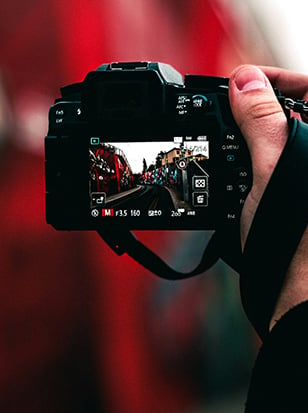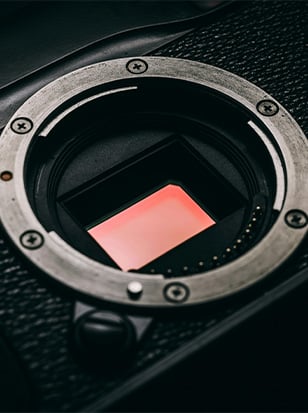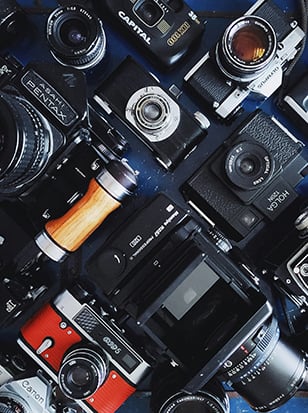
We've put together this guide to the best digital cameras you can buy to help you figure out which camera is right for you. We're covering everything here – compacts, mirrorless cameras and DSLRs, with options for all ability levels and all budgets. This is, quite simply, a list of cameras that we absolutely love, and we reckon you'll love as well.
We've aimed to produce a balanced list of cameras for different types of user. From beginner-friendly options that are highly affordable, to high-end kit for serious professionals, we've covered it all here.
What's coming up:
Best digital camera for photography: Fujifilm X-T5
Best digital camera for video: Canon PowerShot V1
Best entry-level digital camera: Canon EOS R50
Best digital camera under £200: Kodak PixPro C1
Best point-and-shoot digital camera: Panasonic Lumix TZ99
Best all-rounder digital camera: Nikon Z6 III
Best DSLR: Nikon D780
Best professional digital camera: Canon EOS R5 Mark II
Best premium digital camera: Leica M11
For more options, check out our guides to the best mirrorless cameras and the best compacts. Otherwise, read on as we count off the best digital cameras – of all kinds – that you can buy right now…
Best digital camera for photography:

|
Pros:
Cons:
|
Sensor: 40.2MP APS-C X-Trans CMOS 5 Processor: X-Processor 5 Autofocus: Intelligent Hybrid AF with AI subject tracking Video: 6.2K/30p, 4K/60p Body: 476g |
The Fujifilm X-T5 is our top-tier digital camera for those who put photography first. Equipped with Fujifilm's high-quality X-Trans sensor, the X-T5 puts out rich and detailed images that are full of vivid colour. Like all modern Fujifilm cameras, it boasts the popular selection of Film Simulation modes that allow you to add creative, analogue-style looks to your shots. Its upgraded processor also enables cutting-edge autofocus, benefiting from the latest AI-powered subject detection.
Its body design too is first-rate – naturally you get that sublime retro styling that's common among Fujifilm's X range, but the X-T5 also boasts extensive physical control dials on its top plate, hearkening back to the manual controls of film SLRs. But with a big, beautiful electronic viewfinder and a three-way tilting rear LCD screen, it's also a thoroughly modern camera – as further demonstrated by its powerful autofocus system, which benefits from intelligent subject-detecion that can accurately pick out and lock onto specific subjects such as humans, animals and vehicles.
Sleek, stylish and high-quality – the Fujifilm X-T5 is our pick for photographers.
Best digital camera for video:

|
Pros:
Cons:
|
Sensor: 22.3MP 1.4-inch CMOS Processor: DIGIC X Autofocus: Dual Pixel CMOS AF Video: 4K/60p (cropped), 4K/30p (full sensor width) Body: 426g with 5-axis in-body stabilisation |
Canon has come absolutely roaring out of the gate with this fabulous premium compact specifically designed for video and vloggers. Don’t get us wrong – it shoots stills, and does it well – but the video features are the reason people will be buying this camera. At its heart is a 1.4-inch sensor, which is an immediate step up from the 1-inch sensors found in comparable compacts, giving the PowerShot V1 a real edge.
It offers a wide range of video-shooting options, with cropped 4K 60p or 4K 30p using the full width of the sensor. The cooling fan ensures extended recording times, the built-in ND filter allows you to control exposure, and the Dual Pixel CMOS AF system inherited from Canon’s more expensive mirrorless cameras ensures fast and accurate focus tracking.
The integrated 16-50mm lens covers a sweet spot for vlogging — though photo shooters may find it restrictive. It’s also worth noting that there’s no viewfinder on the camera, which again, video shooters likely won’t mind, but photographers probably will.
Best entry-level digital camera:

|
Pros:
Cons:
|
Sensor: 24.2MP APS-C CMOS Processor: DIGIC X Autofocus: Dual Pixel CMOS AF II Video: 4K/30p, 1080p/60p Body: 328g |
Canon's EOS R50 is one of the smallest and lightest members of its mirrorless EOS R range – and it's designed from the ground up to suit beginner photographers and videographers. It's one of the most easy-to-use cameras we've come across, with an effective Guided UI that helps you get used to the key functions and settings and start understanding how the camera atcually works. And its image quality is no slouch either, with its APS-C sensor producing 24.2MP images that pop with vivid colours and crisp detail.
Capable of shooting both JPEG and RAW formats, the EOS R50 can be as simple or as complex as you want it to be. It uses Canon's Dual Pixel CMOS AF II autofocus system, which is fast and accurate, able to lock onto moving subjects to produce sharp images. Burst-shooting tops out at an impressive clip of 15fps with the electronic shutter, which is plenty for capturing images of even tricky, fast-moving subjects like wildlife.
The small dimensions of the Canon EOS R50 do mean that it offers fewer physical control buttons and dials than larger cameras, so you may find yourself relying more on the touchscreen. However, the EOS R system offers an incredibly comprhensive upgrade path, with cameras suited to intermediate users, enthusiasts and professionals – so if you find yourself outgrowing the EOS R50, it'll be easy to trade up to a more powerful model that operates in much the same way.
Best digital camera under £200:

|
Pros:
Cons:
|
Sensor: 13MP CMOS Lens: 26mm F2.0 Video: 1080p Full HD Display: 2.7-inch LCD Battery: Built-in 700mAh Li-ion battery, charges via USB-C |
An ultra affordable camera that has proved a massive hit around the world (particularly in Japan), the Kodak PixPro C1 is a retro-styled compact that’s ideal for budding photographers on a budget. With fixed 26mm F2.0 lens, it provides greater image quality and low-light versatility than many other compacts of its type, which tend to favour low-quality zoom lenses. The wide field of view is great for social shooting and general-purpose photography, ensuring you can fit plenty in the frame.
With 1080p Full HD video, the PixPro C1 also isn’t a bad shout for lo-fi vlogging. It weighs an incredibly compact 115g, making it an easy camera to take everywhere with you, and it uses its own rechargeable battery, rather than relying on disposables like many affordable compacts do. With charming styling and easy operation, the PixPro C1 is an uncomplicated point-and-shoot that pretty much anyone can pick up and use.
Best point-and-shoot digital camera:

|
Pros:
Cons:
|
Sensor: 20.3MP 1/2.3-inch MOS Processor: Venus Engine Autofocus: 49-area Depth from Defocus contrast-detection Video: 4K/30p Body: 322g with USB-C charging port |
While there are plenty of cheap point-and-shoots out there, for our money it’s best to spend a little more to get something that will produce images of superior quality. The Panasonic Lumix TZ99 is just the thing – it’s a clever pocket-sized camera that packs in a 30x optical zoom lens, running the range of 24–720mm equivalent. This makes it a brilliant choice for travel, able to handle all kinds of different shooting situations with ease.
A built-in hybrid optical image stabilisation system helps you make use of that ultra-long zoom mode by counteracting camera shake, and the optimised autofocus system includes face- and eye-tracking. The sensor is a 1/2.3-inch type, which is one of the smallest camera sensors, and this means the camera won’t produce images with as much dynamic range as comparable models with 1-inch or larger sensors. However, in good light it still delivers consistently strong results, and there is also the option to shoot in RAW for maximum flexibility in post-processing.
Best all-rounder digital camera:

|
Pros:
Cons:
|
Sensor: 24.5MP Full-Frame BSI CMOS Processor: EXPEED 7 Autofocus: 273-point hybrid AF with Real-Time Eye AF Video: 4K/60p, 10-bit 4:2:2 Body: 100% weather-sealed and 705g |
Nikon’s Z6 cameras have always been all-rounders – not quite as high-resolution as the Z7 series, not quite as fast as the speedy Z8, but pretty solidly good at everything. The Z6 III is the best refinement of this formula yet, and it’s a camera that can do basically anything without any serious compromises. Its full-frame sensor produces the kind of crisp image quality we’ve come to expect from Nikon’s mirrorless Z-series, and thanks to the partially stacked design of the sensor, the camera is capable of achieving dizzying shooting speeds. Are you likely to need 120fps burst mode very often? Probably not, but here it is!
With dual high-speed card slots, including one CFexpress and one SD UHS-II, the Nikon Z6 III is built to meet the demands of pro and serious enthusiast photographers and videographers. Its megapixel count of 24.5MP may sound a little low in this age of ever-higher resolutions, but unless you’re planning to make large prints, this is probably going to be fine.
Best DSLR:

|
Pros:
Cons:
|
Sensor: 24MP Full-Frame CMOS Processor: EXPEED 6 Autofocus: 51-point Phase-Detection AF via viewfinder; 273-point Hybrid-AF system in Live View Video: 4K 30p Body: Dust- and water-resistant, 765g |
For some photographers, you simply can’t beat a DSLR – and the Nikon D780 is one of the finest that’s still in production. It’s a DSLR on the high enthusiast/professional end, with a full-frame sensor and impressive burst-shooting specs. However, the influx of new mirrorless models has meant that the D780 has significantly come down in price since its launch in 2020, and these days it’s starting to look like something of a bargain. This is especially true when you consider that the venerable F-mount offers a huge range of fabulous lenses, many of which are also available for knock-down prices.
Of course, you don’t get the latest flashy features of Nikon’s mirrorless range — no subject-detection autofocus, no high-res electronic viewfinder, no 8K video. However many enthusiast photographers simply don’t need these things, and if you’re on the hunt to get bang for your buck, a capable DSLR like the D780 could be exactly what you’re looking for.
Best professional digital camera:

|
Pros:
Cons:
|
Sensor: 45MP Full-Frame CMOS Processor: Dual DIGIC X Autofocus: Dual Pixel CMOS AF II, 1,053 AF points Video: 8K/30p, 4K/120p Body: 100% weather-sealed, 738g |
The R5 II could easily be in the top cameras for photography and video separately. But for that reason, we’ve placed it here in the all-rounders. At the heart of this full-frame mirrorless camera is the “accelerated capture” architecture, featuring dual DIGIC Accelerator and DIGIC X processors. With deep-learning AI algorithms, the camera can upscale its 45MP resolution to 180MP, allowing detailed cropping without loss of quality. The sensor is now stacked and back-illuminated for faster readouts. Enhancements include improved IBIS with up to 8.5 stops, a high-resolution viewfinder, a maximum shutter speed of 1/64,000sec, and a burst rate of 30fps, plus advanced FTP for multiple image transfers.
There have been massive upgrades in autofocus including the Dual Pixel Accelerated AF system with 5,850 points for extensive coverage and low-light performance. AI-powered Subject-Detection and “Action Priority” features enhance focus for dynamic subjects. Eye Control AF tracks eye movements in the viewfinder for precision. Video capabilities are advanced, with 8K 60p RAW and 4K at 120p and 60p, multiple recording formats, and professional audio options. A notable feature is simultaneous recording, capturing photos and videos on separate cards, and enhancing workflows across the board.
Best premium digital camera:

|
Pros:
Cons:
|
Sensor: 60MP BSI CMOS sensor Lens: Leica M-mount compatible lenses ISO: 64-50,000 Shutter Speed: 1/16,000 to 1 hour (electronic shutter) Storage: 64GB internal memory and SD card slot |
This is one of the best photographic experiences you can get right now. The Leica M11 is a gorgeous feat of imaging engineering – blending the classic styling of a rangefinder camera with a cutting-edge 60.3MP full-frame BSI CMOS sensor. Though of course, it’s really three sensors in one, with its “Triple Resolution” design allowing you to switch between 60, 30 and 18 megapixels, according to what the situation demands.
Rangefinder focusing is a tricky discipline. It’s an entirely manual experience, contained within the viewfinder, and while it’s certainly not for everyone, if you take the time to learn, it can be a fantastically fast and responsive form of photography.
Images, of course, look fantastic in a range of conditions. The Leica M11 will handle anything you throw at it with aplomb, and even throws in some quality-of-life extras like the 64GB of internal storage in addition to the memory card slot. Granted, shooting 60MP files will eat through that quite quickly, but dial down to 18MP and that’s more than 1,000 shots.
FAQs
How do I choose a digital camera?
There’s no one-size-fits-all answer! This page gives you a helpful starting point, but it’s also worth checking out the latest reviews, talking to other photographers, and even trying a rental or in-store demo. Your final choice should reflect how, what, and how often you shoot.
What is the difference between DSLR and mirrorless cameras?
DSLR cameras use a mirror mechanism and offer an optical viewfinder, while mirrorless cameras rely on digital displays or electronic viewfinders. In 2026, mirrorless systems dominate the market — they’re generally lighter, faster, and feature more up-to-date tech.
How many megapixels do I need in a digital camera?
It depends on what you're shooting. For most people, a camera with 16–24 megapixels is more than enough for high-quality prints and online sharing. Higher megapixel counts are useful for cropping, large-format printing, or detailed commercial work.
Are smartphone cameras as good as digital cameras?
Smartphone cameras have come a long way and are excellent for everyday use. But digital cameras still offer better image quality, larger sensors, and advanced features. Compact models are great options when you want more creative control without the bulk.
How do I transfer photos from my digital camera to a computer?
Most cameras use USB cables or memory card readers for transfers. Many newer models, like the Canon EOS R50, also support wireless transfer via Wi-Fi or Bluetooth - handy for instant sharing or backing up on the go.
What is 4K video recording, and do I need it in a digital camera?
4K video delivers higher resolution and sharper footage than Full HD. Whether you need it depends on your goals - it’s ideal for content creators, vloggers, and anyone looking to future-proof their video work. Brands like Sony and Panasonic continue to lead the way in 4K performance.
Where do digital cameras store their photographs?
Memory cards! Most digital cameras use SD cards, though some higher-end models support faster formats like CFexpress or XQD. Faster cards help with high-speed shooting and 4K/8K video capture.
What batteries do digital cameras use?
Most digital cameras use rechargeable lithium-ion batteries, often specific to the brand or model. Third-party options are usually available too. It’s a good idea to pick up a spare or two, especially for travel or long shoots - and some advanced models offer optional battery grips to extend shooting time.
How do we decide?
Our in-house photography specialists, store staff, and industry partners work together to review our buying guides and advice articles. We also monitor emerging trends and listen closely to customer feedback, ensuring our recommendations stay current and relevant to what photographers and filmmakers are actually looking for.
By carefully curating the products we recommend, our guides are designed to offer clear, trustworthy advice that helps customers choose the right kit with confidence.
If you would like further advice, our contact centre team are here to help. You can also reach us via email or social media. And remember, if you purchase based on our recommendations, your order is covered by our full returns policy.
Trending Buying Guides



Sign up for our newsletter today!
- Subscribe for exclusive discounts and special offers
- Receive our monthly content roundups
- Get the latest news and know-how from our experts