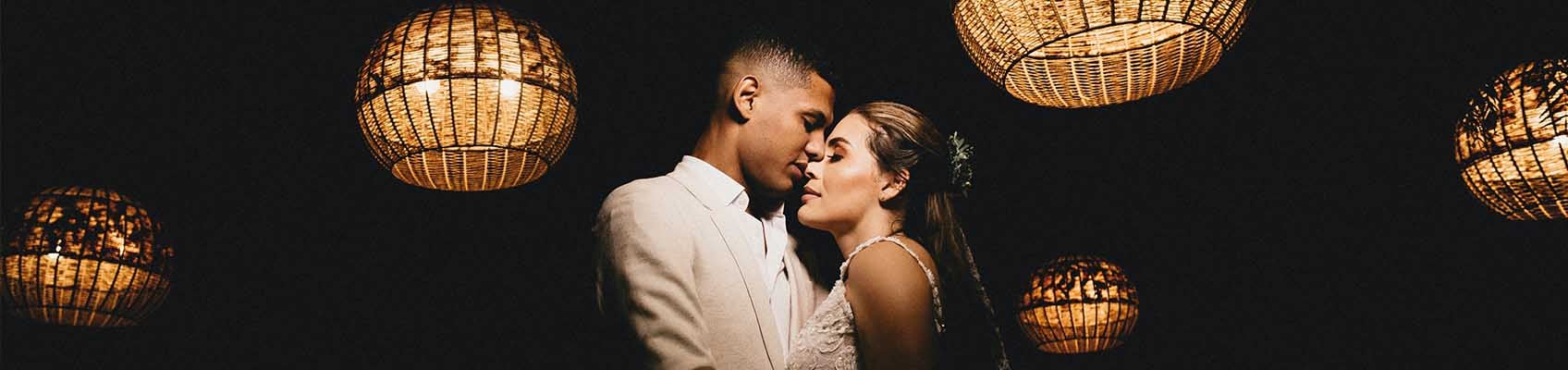
The best cameras for wedding photography need to be able to satisfy some of the most demanding clients a photographer will ever deal with, producing dazling, vibrant, pin-sharp pictures of a once-in-a-lifetime event. Wiht weddings, there aren't many opportunities for retakes or reshoots, and as such, a wedding photographer needs a capable camera that won't let them down.
So, we're here to help! Our guide to the best cameras for wedding photography includes a huge range of capable, interchangeable-lens models that deliver the performance and quality necessary to effectively shoot a wedding. While we've kept budget in mind when making our picks, we have also included some of the top-tier cameras available right now, giving you a broad range to choose from.
For more on our criteria, use the nav buttons to jump to our 'How to choose' and FAQ sections, where we've laid out what makes for a great wedding photography camera. But otherwise, let's get into it!
Best Mirrorless Camera for Wedding Photography
If you’re looking to tick all the boxes we mentioned in our intro above, a mirrorless camera is going to be your best bet. Yes, you have other options with their own advantages – and we’ll get into them – but mirrorless models offer a combination of high-speed autofocus, silent shooting and top-notch image quality, all of which is catnip to any wedding photographer.
There are plenty of mirrorless systems you can choose from – we’ve suggested three here, but there are lots of other options, so you may also want to check out our guide to the best mirrorless cameras.
Some mirrorless cameras are designed to prioritise resolution and image quality; others are built more for speed. Some are made to do everything – these, unsurprisingly, tend to be the most expensive. We’ve picked just a few that absolutely excel at the things wedding photographers need the most…

Pros:
- Stunning 45MP image quality
- Class-leading AF with Registered People Priority
- Extremely effective IBIS (8.5 stops!)
Cons:
- Professional price
The Canon EOS R5 Mark II is an absolutely stunning imaging tool for professionals, and it's quite possibly the best camera that wedding photographers can buy. The full-frame 45MP CMOS sensor produces pristine, crisp, detailed images, which can be digitally upscaled via deep-learning technology. And the Dual Pixel CMOS AutoFocus technology is not just one of the fastest and most accurate systems on the market, but it also now benefits from Registered People Priority. You can specifically program in the faces of the most important players (i.e. bride, groom, immediate family) and the camera will intelligently recognise them and prioritise focusing on them.
The EOS R5 Mark II incorporates one of the most effective in-body image stabilisation (IBIS) systems around, providing up to 8.5 stops of effective compensation when paired with optically stabilised RF or EF lenses (the latter require an EF-EOS R adapter in order to work). This means you can keep shooting well into the evening when the light gets low, and still get sharp shots while using slower shutter speeds handheld.
An absolutely stunning professional camera, the EOS R5 Mark II is an incredible choice for wedding photographers.

Pros:
- Excellent all-round feature set
- 33MP is a nice sweet spot for weddings
- Brilliant AF tracking and sticky Eye AF
Cons:
- Video features aren't as advanced as some competitors
- CFexpress slot is more expensive Type A
The Sony A7 cameras have always been the all-rounders of the line, in contrast to the high-resolution A7R models or the low-light video specialist A7S cameras. As wedding photographers need to be prepared for anything and ready to deal with the unexpected, the Sony A7 V is a perfect choice. Its full-frame sensor has a resolution of 33MP, which is arguably the ideal sweet spot for wedding shooters – enough for great prints and cropping in, not so high that you’ll fill up your cards too fast.
The autofocus tracking on the A7 V is also excellent – once it grabs a subject, it’s very unwilling to let go, which is great news if you’re trying to keep hold of the star couple as they move through a crowd. High-ISO performance is very good and the sensor-shift stabilisation is highly effective. The A7 V can shoot at up to 30fps, blackout-free, thanks to its upgraded processor and newly stacked sensor design. Sure, there are other cameras out there that can go even faster, but let's be real – 30fps is easily enough to handle weddings, and the fast-clearing buffer is extremely welcome if you need to fire off lots of bursts in quick succession.

Pros:
- Impressive shooting speed with very good AF tracking
- Excellent lens range
- Beautiful viewfinder
Cons:
- 26MP is on the low end nowadays
The Fujifilm X-H2S is the speedster of the Fujifilm X mirrorless series of APS-C cameras. While it’s perhaps not as stylish to look at as gorgeous entries like the X-T5, the X-H2S can burst-shoot at a blistering 40fps while still making full use of autofocus. Image quality is superb, of course – we’d expect nothing less from Fujifilm. Having access to the X-mount means you get some beautifully expressive lenses to play with, and the highly effective stabilisation system can provide up to seven stops of effective compensation.
While we’ve mostly focused on photography in this guide, the X-H2S does have a seriously meaty video spec that’s worth mentioning. Many wedding photographers also like to offer video where clients want it, and the suite of video options in the X-H2S, including 10-bit 6.2K 30p and more, means you can add this particular string to your bow with aplomb.
Best DSLR Camera for Wedding Photography
DSLRs have been producing fantastic results for wedding photographers for decades now, and if you choose to shoot on one in 2023 you’ll be in good company. There are plenty of reasons why a DSLR can be advantageous to a wedding photographer – they tend to have great battery life, reducing the likelihood of power failure at a critical moment. The main DSLR systems from Canon and Nikon also have fantastic lens ranges, with loads of great second-hand options as well as newer ones (check out our selection of used DSLR lenses for what’s in stock currently).
High-end DSLRs also tend to cost less than they used to, now that professional users are largely shifting to mirrorless – so, if you want to use a DSLR to shoot weddings, you have the potential to make some serious savings. The DSLRs we’ve picked here are some of the greatest ever made.

Pros:
- Fast, high-resolution shooting
- Well-implemented articulating touchscreen
- Genuine silent shooting mode
Cons:
- Big and bulky
- Live View focusing is contrast-detection only
The Nikon D850 is one of the best DSLRs ever made. Even though the Z series of mirrorless cameras are newer and shinier, no one is going to argue with you if you plan to shoot a wedding with the D850 – it is more than capable of doing an exemplary job. Its 45.7MP back-illuminated, full-frame CMOS sensor delivers stunning images even at higher ISO sensitivities. You can push it up to ISO 12,800 and still get images that wouldn’t look out of place in a wedding album, as long as you don’t mind doing a little noise-reduction in post.
Unusually for a DSLR, the Nikon D850 has a genuine silent shooting mode – not just “quiet” shooting, but actually silent. It only works in Live View, so you’ll need to be comfortable composing with the articulating LCD screen. However, it’s worth being aware that the D850 can’t take advantage of its on-chip phase-detection autofocus system in this mode, relying instead on contrast detection, so the autofocus won’t be quite as lightning-fast.

Pros:
- Strong, sturdy construction
- Phase-detection AF in Live View
- Excellent battery life
Cons:
- 24.2MP is on the low side
- No in-body stabilisation
The Nikon D780 was one of the last DSLRs to be released for Nikon F-mount, and as such, it’s packed with high-end features that we’ve also seen in the firm’s mirrorless cameras. It gains on-sensor phase detection autofocus that even works in Live View – something that even the mighty D850 conspicuously lacks. This is especially useful given the fact that the D780 delivers its fastest burst rates when you’re using Live View – 12fps, as opposed to 7fps when shooting with the viewfinder. Having dual UHS-II SD card slots is also an asset.
The resolution of 24.2MP is reasonable enough, but a little on the low side for wedding photographers, who may want more room to crop in and make prints. It’s also worth being aware that there’s no in-body stabilisation, meaning you may want to prioritise buying optically stabilised lenses to compensate.
Best Medium Format Camera for Wedding Photography
There was a time when we wouldn’t have considered for a minute recommending medium format cameras for shooting a wedding – but mirrorless medium format systems like the Fujifilm GFX and Hasselblad’s X system have changed the game. Wedding photographers are now achieving fantastic results with large-sensor cameras boasting triple-digit megapixel counts, and if you want to bring that inimitable medium format ‘look’ to a wedding shoot, well, now you can.
You have to be aware of the system’s limitations – as we’ll get into when we look at the specific cameras. You aren’t going to get the fastest autofocus, you aren’t going to rattle off dozens of high-speed burst images. However, with solid technique, medium format cameras can produce simply breathtaking wedding images that you can’t get with anything else. Here are the medium format cameras we’d recommend for making it happen.

Pros:
- Autofocus advancements make medium format viable for weddings
- 100MP allows for absolutely stunning prints
- Incredible low-light capabilities
Cons:
- Inevitably slower than other formats
- Huge storage needs
The images captured by the 100MP sensor in the Fujifilm GFX 100S II camera are absolutely breathtaking – you can make enormous prints out of them that will take your clients’ breath away (and could be handy if you’re planning to show off your work at a trade show or similar). In low light, this medium format camera is also an absolute beast, letting you push up the ISO and still capture incredible levels of detail in the frame.
The autofocus system isn't as lightning-fast as a full-frame or APS-C mirrorless system camera, but advancements from the previous GFX 100S camera have been significant, and the GFX 100S II is a viable option for wedding shooting. An updated algorithm with improved subject detection improves your hit rate, benefiting from Face/Eye autofocus to keep your images focused where they should be. Just bear in mind that you're going to need some big memory cards, as those 100MP files will eat up space!

Pros:
- Stunning high-resolution images with gorgeous colours
- Industry-leading 10-stop image stabilisation
- 425-point hybrid autofocus system
Cons:
- Again, big storage needs
The medium-format Hasselblad X2D 100C II brings a raft of improvements to Hasselblad’s X system that makes it a credible option for wedding photography. As well as upping the resolution to 100MP to match its main rivals from Fujifilm, this newer camera also benefits from a stabilisation system that is completely class-leading among all camera types. The 5-axis system provides up to 10 stops of effective compensation, enormously expanding your capacity to use the camera handheld at slow shutter speeds.
Also, of course, the image quality is simply stunning. Absolutely breathtaking, with that inimitable depth that only medium format can provide; once again if you want to make prints of your wedding images, the Hasselblad X2D 100C II will produce absolutely unreal results. The dynamic range on this thing is incredible and the high-ISO performance is excellent. And the autofocus system ain't bad either; it's a 425-point hybrid system making use of phase detection, contrast detection, and LiDAR, with subject detection to help things along.
Best Budget Camera for Wedding Photography
When it comes to wedding photography, the term ‘budget camera’ needs to be considered in a slightly different context. The fact is that ultra-cheap cameras simply aren’t really suitable for wedding photographers, and we’d be derelict in our duty if we were to pretend otherwise. As such, we’ve picked out some models that aren’t the cheapest you can buy, but are significantly less expensive than the others featured on our list. Bear in mind that these cameras could also work as second bodies (an important thing for wedding photographers to carry, in case of catastrophic equipment failure on the day).
If you’re just starting out on your wedding photography journey, these budget cameras would make for an excellent entry point, with all the features wedding photographers are looking for, as well as plenty of lenses to choose from.

Pros:
- Great value for full frame
- Works well with F-mount lenses (via adapter)
- Lovely electronic viewfinder
Cons:
- 4.5fps burst is a little pedestrian
- LCD only tilting, not fully articulating
An affordable, entry-level full-frame camera, the Nikon Z5 produces terrific results for a considerably lower outlay than its high-end siblings like the Z7 II or the Z8. If you’re looking to enter the Z system on a budget, perhaps with a view to upgrading once you’ve got a few weddings under your belt, it’s just the thing.
It would have been easy for Nikon to skip the second card slot on its entry-level model, so it’s a relief to see the Z5 sporting two media slots for that all-important backup. Image quality is excellent, even when you push the ISOs up to 12,800 or even 25,600 if you need to (settings beyond that probably aren’t going to produce images acceptable for a wedding album). The autofocus makes use of deep-learning intelligent AI for precise subject-tracking, though the burst rate of 4.5fps may be a little lower than some wedding shooters would prefer.
Nikon has since released a successor to this camera, the Z5 II, a truly excellent entry-level mirrorless camera offering outstanding value for money. However, as the Z5 is still available and more affordable, we're sticking with it as our budget recommendation for now.

Pros:
- Excellent value for full-frame mirrorless
- In-body stabilisation
- Lots of E-mount lenses
Cons:
- 24MP is on the low side
- Lacks modern features like subject-detection autofocus
The Sony A7 III dates all the way back to 2018, but is still available new, and is still an excellent option for any wedding photographer working to a budget. A full-frame mirrorless all-rounder, the A7 III has a lot to like about it. It’s nice and slim, but still manages to find room for in-body image stabilisation and an ergonomically sound moisture-resistant design. The OLED EVF and tilting rear LCD are both pleasant to compose with, and the hybrid autofocus system is pretty reliable – though not a patch on systems that have come along since, as it lacks the latest advancements in intelligent subject detection.
Also, the A7 III was the first camera in the mainline A7 series to upgrade to dual card slots, which really is a necessity for wedding photographers – you don't want to be relying on just one card, as an ill-timed card corruption could ruin your entire day's work. You'll also want to think about whether 24MP is enough resolution for your purposes, as if you plan to make big prints or like to heavily crop into your compositions, you may want more pixels at your disposal.
How to choose
These are the key features we look for in a great camera for wedding photography:
Fast, accurate autofocus - When getting those candid shots of the wedding party, you need a camera that will grab focus quickly and efficiently, even when the light gets low. Weddings are full of unrepeatable moments, and you need to be able to capture them. Specialist AF modes like Eye AF or Subject Recognition can make life much easier for a wedding photographer.
Dual card slots - In many genres, an extra card slot is a nice bonus – for weddings, it’s essential. You need an extra card running as backup for all the important moments, in order to ensure that a corrupted card doesn’t wipe out the entire day and leave you with nothing to give the client.
A good-sized sensor with decent resolution - You want to be able to produce nice, clean shots in all lighting conditions – this necessitates a decent-sized sensor. Full-frame is ideal, though there are credible options in APS-C and even Four Thirds. Resolution-wise, you want a camera with enough pixels to make good-looking prints, and being able to losslessly crop in is handy when it comes to the edit.
Fast, silent shooting - When shooting the ceremony itself, being able to fire off lots of shots without drawing too much attention to yourself is a major asset.
FAQs
What features should I look for in a camera for wedding photography?
When choosing a camera for wedding photography, consider factors like high resolution (at least 24 megapixels), low-light performance, fast autofocus, and the ability to use interchangeable lenses.
Is a full-frame camera necessary for wedding photography?
Full-frame cameras are preferred for wedding photography due to their superior image quality and low-light performance, but some APS-C and Micro Four Thirds cameras can also produce excellent results.
Should I choose a DSLR or a mirrorless camera for wedding photography?
Both DSLRs and mirrorless cameras can be great choices for wedding photography. Mirrorless cameras have gained popularity for their compact size and silent shooting, but DSLRs still offer excellent performance.
Do I need multiple cameras for wedding photography?
Having multiple cameras with different lenses can be beneficial for capturing various angles and moments during a wedding. It provides backup in case of equipment failure.
What are the best lenses for wedding photography?
Popular lenses for wedding photography include fast prime lenses like a 50mm f1.8 or 85mm f1.4 for portraits, as well as versatile zoom lenses like a 24-70mm f2.8 for flexibility.
Should I invest in camera accessories for wedding photography?
Yes, investing in accessories like a good flash, tripod, and quality memory cards is essential for wedding photography. They enhance your capability to capture diverse wedding scenarios.
How do we decide?
Our in-house photography specialists, store staff, and industry partners work together to review our buying guides and advice articles. We also monitor emerging trends and listen closely to customer feedback, ensuring our recommendations stay current and relevant to what photographers and filmmakers are actually looking for.
By carefully curating the products we recommend, our guides are designed to offer clear, trustworthy advice that helps customers choose the right kit with confidence.
If you would like further advice, our contact centre team are here to help. You can also reach us via email or social media. And remember, if you purchase based on our recommendations, your order is covered by our full returns policy.

Sign up for our newsletter today!
- Subscribe for exclusive discounts and special offers
- Receive our monthly content roundups
- Get the latest news and know-how from our experts