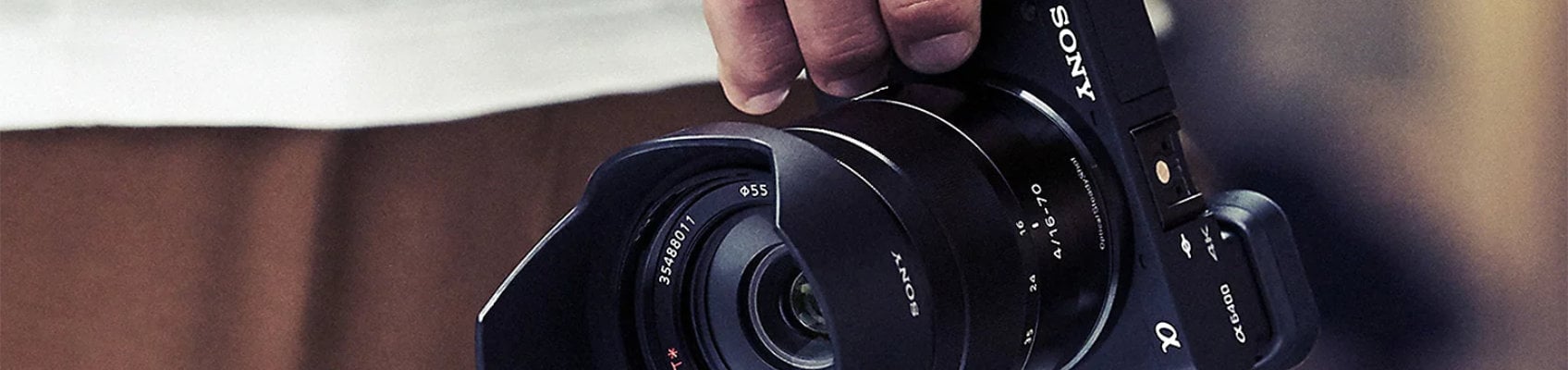
There are plenty of excellent viable options for anyone who’s looking to pick up a Sony E-mount beginner camera – so many that it can be a little confusing. As such, I’m going to make it simpler and look at just two Sony cameras that I think are ideal for any beginner photographer or videographer on a budget: the Sony A6000 vs A6400.
The letters and numbers of camera names can feel a bit oblique to the newbie, but it’s fairly straightforward – in Sony’s entry-level range with smaller APS-C sensors, cameras with the same number belong to the same family, and the higher the number, the newer the camera. So, the A6400, which came out in 2019, is essentially an updated version of the A6000, which first hit shelves back in 2014.
While both cameras use a 24.2MP APS-C sensor, you can think of the A6400 essentially as a tuned up version of the older camera, with more sophisticated and faster autofocus, speedier burst shooting and better video options. This is also reflected in the relative prices of both cameras on the second-hand market; the Sony A6000 can be found in “Good” condition” or better for as little as £290, while the Sony A6400 second-hand price sits around the £490-530 mark.
If you were looking for lenses, with the A6000 you could stick with the budget approach and add a used Sony FE 50mm f/1.8 for around £112. Whereas A6400 buyers with a little more to spend could look to add a Sony E 55-210mm f4.5-6.3 OSS zoom, providing telephoto reach for an additional £145 or so.
The question is – is that extra £200-300 worth spending to get the newer camera?

Sony A6400 vs A6000: which is the best budget mirrorless camera?
In my view, it depends on what you shoot. The fundamental image quality of the two cameras is essentially the same, with the same sensor and resolution at the heart of both. The upgrades are all in operation and speed, with the A6400 boasting that much more sophisticated autofocus system that still impresses today.
So, if you shoot portraits, landscapes – subjects that don’t really benefit from fast autofocus, then I’d say that the A6000 is the better pick, and you might as well save some money. However, if you’re planning to shoot wildlife and/or sports, subjects that demand a camera that can keep up, then future-proofing yourself with the A6400 is the way to go. This is also what makes it a good pairing with the 55-210mm lens – the APS-C crop factor will extend the effective maximum focal length of this lens to 315mm, putting serious wildlife photography in play.
I’d also say that if your priority is video over photography – or you plan to shoot a little of both – then it’s a no-brainer in favour of the A6400. Offering full 4K capability with full pixel readout and no pixel binning, the A6400 is far superior for video to the older camera, which only shoots at a maximum resolution of Full HD.
So if you’re asking yourself if the Sony A6000 is still good in 2026, I’d say the answer is a qualified yes – but there are many more photographers, and especially videographers, who will get much better value from a newer Sony A6400.
Take a look at our extensive range of second-hand products here!
About the Author
Jon Stapley is a London-based freelance writer and journalist who covers photography, art and technology. When not writing about cameras, Jon is a keen photographer who captures the world using his Olympus XA2. His creativity extends to works of fiction and other creative writing, all of which can be found on his website www.jonstapley.com
The Wex Blog



Sign up for our newsletter today!
- Subscribe for exclusive discounts and special offers
- Receive our monthly content roundups
- Get the latest news and know-how from our experts