Advice. Sometimes, it seems like everyone is full of it – and the world of photography is no exception. Articles and videos with “essential tips for beginners” are everywhere, and in many cases, it feels like the word “essential” is doing a lot of heavy lifting.
We wanted to do something different. Cut through the noise, skip past all the well-worn clichés that everyone has heard a hundred times and figure out what it is that beginner photographers actually need to know. So, we asked the pros.
We reached out to professional photographers and content creators in a range of disciplines and asked them a single question: what’s the one most valuable lesson you’ve learned? The one top tip, the key unexpected thing you wish you’d known before starting out. The responses we received varied wildly, covering all sorts of areas from gear to technique to the realities of hustling for work in the tricky freelance world of photography.
So, in the words of 19 pro photographers and content creators, here are the most valuable lessons for beginner photographers…
1. Amy Shore – automotive photographer, Nikon ambassador
“The most valuable lesson I've ever learned: a polarising filter will elevate your car photography. It's something I had no idea about when I started shooting cars and the second I started using one was the biggest step forward to me looking like I was a pro (before I was!).”
View this post on Instagram
2. Amelia Le Brun – travel and lifestyle photographer
“Don’t get too caught up in gear specs. I found when I was starting out there was a lot of pressure to spend a lot of money on the latest gear, and update systems as soon as new models come out, but in my opinion it just isn’t necessary.”
“I always buy my gear second-hand and use it until it falls apart; not only is this better for the environment, but it means more money toward travel and new photo experiences.”
3. Damien Demolder – street photographer, former editor of Amateur Photographer magazine
“‘Being a good photographer is about knowing when not to take the picture’ – a piece of advice given to me when I was very new, by a photographer I assisted called Alan Roberts. It means we need to look at the scene, the person, the composition in the frame and know when it doesn’t look good enough.”
“So instead of shooting and being disappointed later, we acknowledge it isn’t right and we take the time to change something. Asking myself before pressing the shutter button, ‘Is this really the picture I want to take?’ has helped me recognise in advance what works and what doesn’t, and to fix problems before they are recorded. Of course I don’t remember to do this every time, but when I do, it makes me a better photographer.”
@damien.demolder, damiendemolder.com
4. Carolyn Mendelsohn – portrait photographer, Nikon Ambassador
“I found myself on a reality TV photography series in 2008. Even though I instinctively knew how to make a good photograph, I hardly knew how to operate my camera, and I was terrified I'd be found out. I was given an assignment to photograph a very famous person in a studio, with TV cameras following my every move.”
“I had never used studio lighting before and, inside, I was terrified. I did my research and knew the kind of lighting I wanted, but not how to achieve it. My mentor, the brilliant Joy Gregory, said to me, ‘Don't be scared – light is light. Explain what you want, and people will help.’”
“It made such a difference. I was able to concentrate on connecting with the person I was photographing, and the result was great. So my advice comes straight from Joy: don’t be scared, light is just light; get to know it and spend time connecting with the person you are photographing.”
“Don't be afraid of making mistakes. Don't fear what other people will think of your work. In fact, be open to doing your worst work. Take risks, experiment, and play. That's often where the magic happens.”
“Look for the good light. Learn not to fear changeable natural light; embrace it and use it to your advantage. And remember, you can learn to use artificial light too. The quality of light makes a real difference to a photograph.”
“Always keep breathing. If you stop breathing, your subject will too.”
@carolynmendelsohn_, carolynmendelsohn.com
5. Tom Mason – wildlife photographer, Nikon Europe Optics Ambassador
“Find a project close to home. It always seems like the sexy thing to head off into the most remote parts of the country (or world) looking for subjects, but the key to improving your photography is TIME with your subject.”
“Finding a project or subject you can visit often (every few days or once a week) in your local area will drastically increase your opportunities. A chance to develop your images, more time to experiment, try new angles and styles, make mistakes and then fix them the next time. Don’t underestimate what’s on your doorstep as a learning opportunity!”
@tommasonphoto, tommasonphoto.com
View this post on Instagram
6. Jon Devo – tech expert and content creator
“Buy the best general-purpose lens you can afford. Quality glass will elevate the look of your content and will far outlive any camera body you can afford when you're starting out.”
“My first lens was the Canon EF 24-70mm F2.8L, I bought it with the Canon EOS 40D. I upgraded the camera a year later, but I still have that lens and still use it almost 20 years on. If you want your work to stand out from the beginning, and you want real value for money, invest in lenses.”
7. Drew Gibson – automotive photographer
“I think the best advice I could give anyone would be to get out there and take pictures. There really is no substitute for real-world experience. Analyse your work, don't be afraid of images not appearing how you intended, and take every opportunity you can to take pictures. A passion for the subject you shoot and experience will get you a long way.”
@drewgibsoncaptures, drewgibson.co.uk
8. James Artaius – portrait, beauty and commercial photographer, Editor-in-Chief of Digital Camera World
“The most valuable lesson I learned was during my photographic apprenticeship, and it's a simple one: when looking at an image, your eye is drawn to the highest point of contrast. This is enormously helpful to be aware of, both at the point of capture and when you're editing.”
“Wondering why a shot isn't working? There's a very good chance that your eye is going to the brightest part of the image rather than the subject. A bonus tip from my mentor: if you're struggling to spot the highest point of contrast, look at your image upside-down and it will be easier to see!”
@jamesartaius, digitalcameraworld.com
View this post on Instagram
9. Matty Graham – photojournalist, videographer, founder of Pixel-Click
“My tip would be: don't be afraid to mix systems. Far too many photographers wed themselves to a brand, for better or worse. If your pockets are deep enough, there's nothing wrong with mixing up your systems.”
“For example, for my stills work, I prefer Canon colour science and own a number of camera bodies. However, there are times when I'll want to capture video and need a lighter, compact system, and this is when my Micro Four Thirds gear comes in handy. This approach won't be for everyone, but it's worked well for me.”
@pixelclickmatty, youtube.com/@adventuresinaperture
10. Lou Johnson – motorsport photographer
“My biggest piece of advice for any up-and-coming photographers would be to remember the best work we do happens just outside of our comfort zone. Always push yourself creatively to grow as a photographer. Momentum within the industry can take a while to build, so stay patient. Keep shooting, keep networking, keep striving to improve your work and stay hungry for more. It takes time (sometimes much longer than it should) but if you’re driven and shooting with your heart, it’ll all be worth it.”
@loujohnsonphoto, loujohnsonphoto.com
View this post on Instagram
11. Giacomo Brunelli – fine art photographer
“My top tip for emerging photographers is simple: actually find the time to shoot. It sounds strange, but the vast majority of people just aren’t producing any work.”
@giacomobrunelli1, giacomobrunelli.com
12. Santi Palacios – photojournalist, Canon Ambassador, Editor-in-Chief of Sonda Internacional
“Over years of work, I have learned many lessons, but perhaps the one that has had the greatest impact on my career as a photojournalist is this: When in doubt about whether to go or not, go anyway.”
“Most of the stories that have shaped my career began with uncertainty. There was never a guarantee that anything important would happen, that I would make meaningful photographs, or even that the journey would be worthwhile. The best opportunities rarely arrive with certainty; more often, they begin with a question mark.”
“Looking back, I may regret some of the stories I never pursued. But I have never regretted taking the chance to go.”
@santipalacios, santipalacios.com
13. Jon Stapley – film photographer and photography writer
“Have a public email address. I’m serious. In my work, I spend a lot of time cold-contacting photographers for feature opportunities and interviews, and you would be amazed how many of them don’t bother to have a public-facing email address.”
“Their bios will say things like ‘get in touch with me on Instagram’. The thing is, though, that #1. Not everybody is on Instagram. And #2. Not everybody wants to use Instagram for professional communications.”
“I have worked with magazine editors, marketing directors, heads of content and other very senior people who want to give photographers money and are not personally on Instagram. If you make Instagram the only way for someone to get in touch with you, I can guarantee that you are cutting yourself out of opportunities.”
“Spend five minutes setting up a ‘[email protected]’ address, and stick it somewhere that people can see it. That’s all you have to do.”
14. Ollie Taylor – astrophotographer
“Don’t wait for someone else to hand you an opportunity; they probably won’t. Once you have the clients, commissions, experience and capital, you will basically have a feeling things are going in the right direction, stop sitting on the big ideas and find a way to make them happen. Every unique image that went far sales-wise, or ambitious tour I’ve created – from Greenland in winter, to Peru, Chile and Bolivia – came about because I got on a plane and made it happen myself.”
“Looking back, some could have launched five years earlier, but I doubted myself and waited for the right organisation or business partner to throw me a bone or validate my ideas. The opportunities do come along: I’ve worked with Huawei, contracted to Panasonic and have recently done some work with the Princes Royal Commission in Saudi from such random opportunities.”
“However, the real heavy hitters, I’ve put together first at the desk, then with months on the ground travelling and making connections on my own. Experience matters, of course, but so does knowing when you’re ready.”
“In a nutshell: don’t let the biggest obstacle in your career be you.”
@olliemtaylor, ollietaylorphotography.com
15. Al Brydon – photographer
“When you’re worried about your photographic progress (and we all stop and think about it occasionally), the question that seems to pop up is, ‘Am I being noticed?’ We have limited control over the answer to that. A much more pertinent question, and one over which you have some agency, is, ‘Am I making the work I need to make? The work I’m compelled to make?’ Try not to let the first question dictate the second. If the world is ready for your work, then it’s ready. If it’s not, it’s not.”
“You will, most likely, be dead forever. This isn’t about procrastination (I’m as guilty as the next person when it comes to that). Life is temporary. The people we love are temporary. This moment is temporary. So, pay attention. And remember, even in these trying times, keep making the work, because every photograph you gently pluck from the void is a rather glorious ‘screw you’ to the people who want to watch the world burn.”
“P.S. Buy the most comfortable footwear you can afford. Many of us are on our feet a lot, are we not?”
16. Kristina Varaksina – visual artist and portrait photographer
“The most important factor in your career, in my experience, is consistency. It’s the consistency with which you produce your personal work, consistency with which you put it out there. But also, and what’s equally important, it’s the consistency with which you reach out to decision-makers in the industry and people who commission photographers.”
“Do not send one email and think your job is done; follow up regularly. Produce new work regularly. Submit to competitions and open calls regularly. Develop your organisational skills in parallel with your artistic vision, and you’ll be unstoppable.”
@kristinavaraksina, kristinavaraksina.com
View this post on Instagram
17. Kevin Mullins – documentary and wedding photographer
“The most valuable lesson I learnt, and I tell other photographers, is not to follow trends. Especially in this modern age of social media, it's easy to try to compare yourself to everyone else and wonder why you aren't as good. The fact is, it's not about being as good – it's about being different. We don't all have to do the same thing, and in fact, following your own passion and style will lead to a much more stable, enjoyable and profitable business.”
@kevinmullinsphotography, www.kevinmullinsphotography.co.uk
18. Jon Devo (again) – tech expert and content creator
(Look, he gave us two and we liked them both.)
“Specialise. Choose a subject you love to work with and dedicate yourself to that and that alone. You will go further in your career faster if you are a specialist that really knows their subject, and you have built a solid portfolio demonstrating that expertise.”
“Generalists are common. While it's good to have a general understanding of photography and a general application of skills, a specialist in any field is always going to stand out over you when your potential clients are comparing portfolios.”
“If you don't want to specialise in a specific photographic field, I would then say develop your own unique visual characteristic or language. So that no matter what you shoot, people can begin to identify your look. That way, you become a specialist at delivering your own signature style and people will come to you for that (if it's popular enough).”
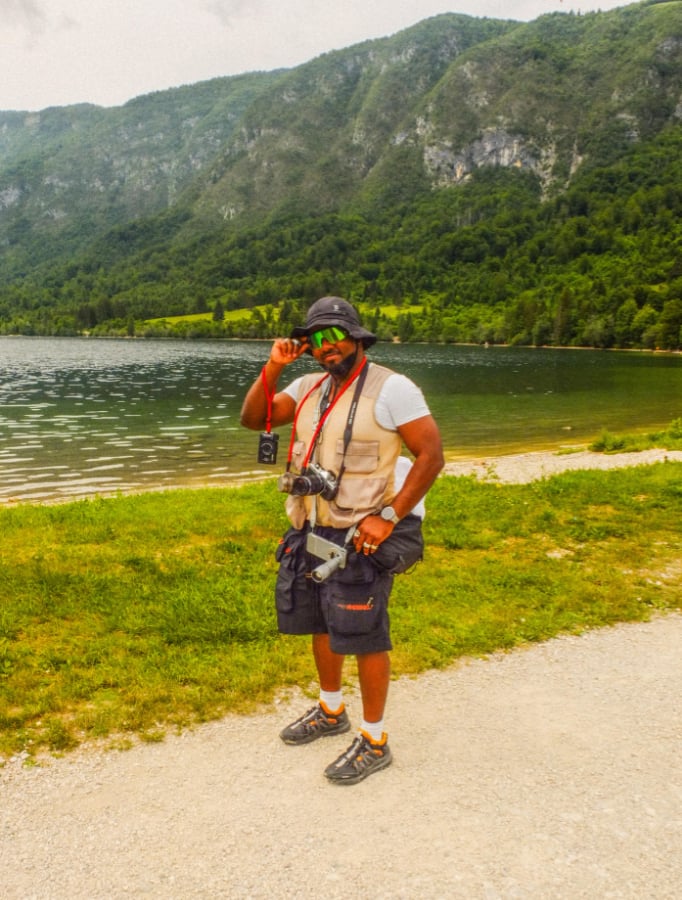
19. Karey Walter – photographer
“Trust your intuition. The strongest photographs come from fully committing to your vision and bringing your conceptual ideas to life. Don’t second-guess yourself – your unique perspective is your greatest strength.”
@kareywalterphotography, kareywalter.com
20. Jon Enoch – commercial photographer and director
“I’ve been given a lot of advice over the years. Some of it’s been genuinely useful. Some of it hasn’t aged well. A fair bit of it I’ve just ignored. But there’s one thing that has stuck with me, and it’s probably the most valuable lesson I could pass on.”
“Clients like working with solid, decent people. Be nice. Have some fun. We aren’t heart surgeons.”
“It sounds simple, almost too simple, but it’s true. This job is as much about you as it is about your photography. Most people who are drawn to photography are obsessed with it. Cameras, lenses, lighting, gear. All of it matters, of course. It’s important to understand your craft and keep pushing it forward. But it’s not the whole story, not even close.”
“At a certain point, the thing that separates people isn’t technical ability. It’s how they show up. How they communicate. Whether people trust them. Whether they enjoy being around them.”
“Invest in yourself as much as you invest in your kit bag. It’s very easy to disappear down the rabbit hole of tiny, obsessive details. Rearranging your portfolio for the tenth time. Worrying whether page fifteen should be page six. Tweaking things that, in reality, won’t change much at all.”
“None of that matters if you can’t jump on a video call with fifteen people and lead a conversation. If you can’t present a treatment clearly. If you can’t pitch an idea with confidence.”
“The higher you go, the less time you actually spend taking pictures, and the more time you spend talking about taking pictures. That’s just the job.”
“You’re expected to have ideas. To articulate them. To reassure people. To bring energy into a room, even if that room is a grid of faces on a screen.”
“So yes, learn your craft. Understand light. Know your gear inside out. That’s your foundation. But don’t stop there.”
“Work on how you communicate. Learn how to listen. Get comfortable presenting your thoughts. Be someone people want to collaborate with.”
“Because in the end, people don’t just hire images. They hire the person behind them.”
About the Author
Jon Stapley is a London-based freelance writer and journalist who covers photography, art and technology. When not writing about cameras, Jon is a keen photographer who captures the world using his Olympus XA2. His creativity extends to works of fiction and other creative writing, all of which can be found on his website www.jonstapley.com
The Wex Blog
Sign up for our newsletter today!
- Subscribe for exclusive discounts and special offers
- Receive our monthly content roundups
- Get the latest news and know-how from our experts