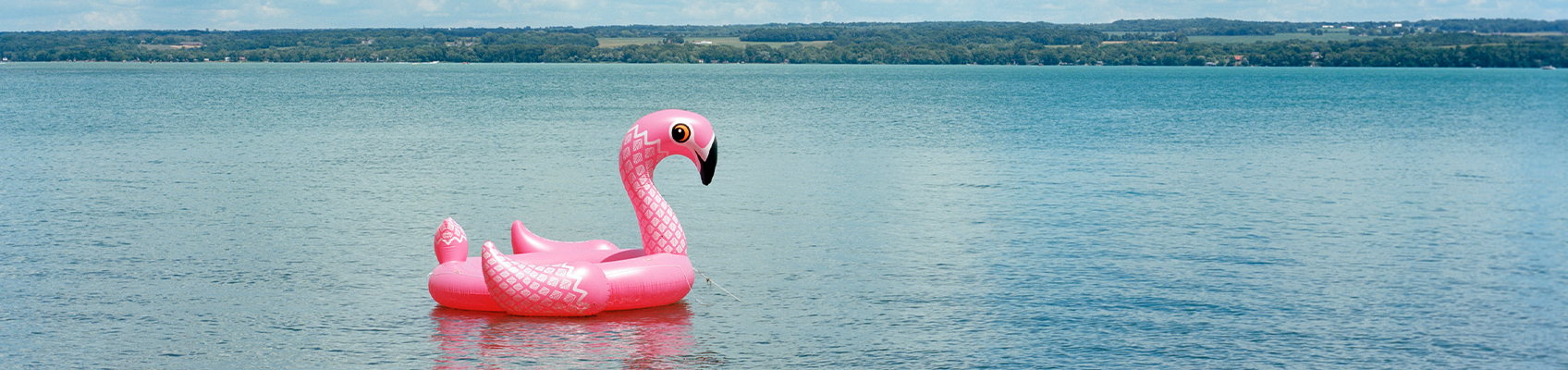
Many creatives say we use art to express ourselves, but do many of us interrogate what we mean by that? Do we stop to ask whether we understand the feelings we are “expressing” with our art? And if not, are we expressing them at all?
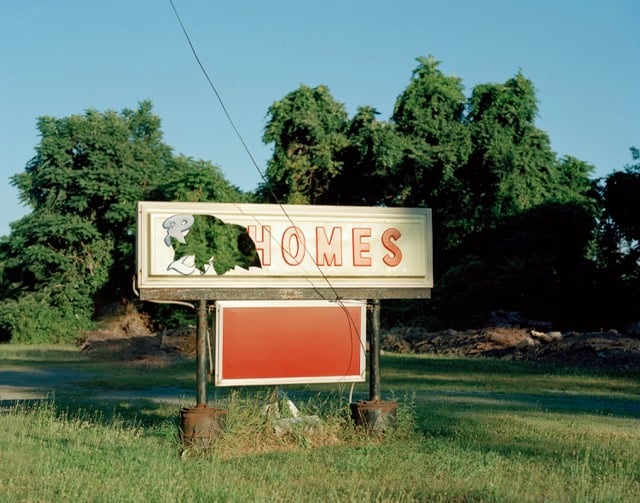
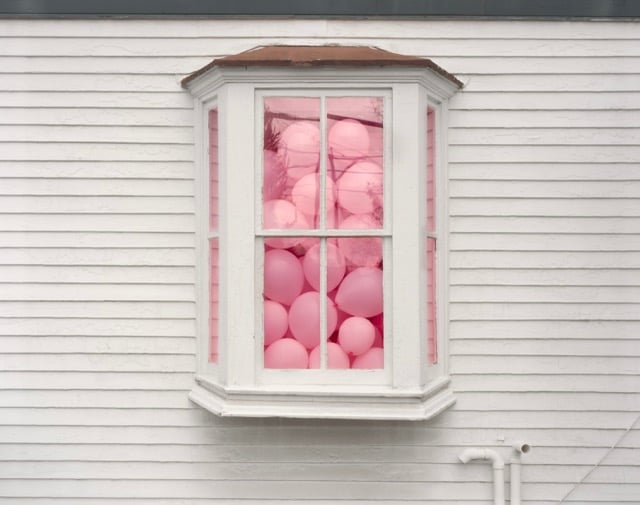
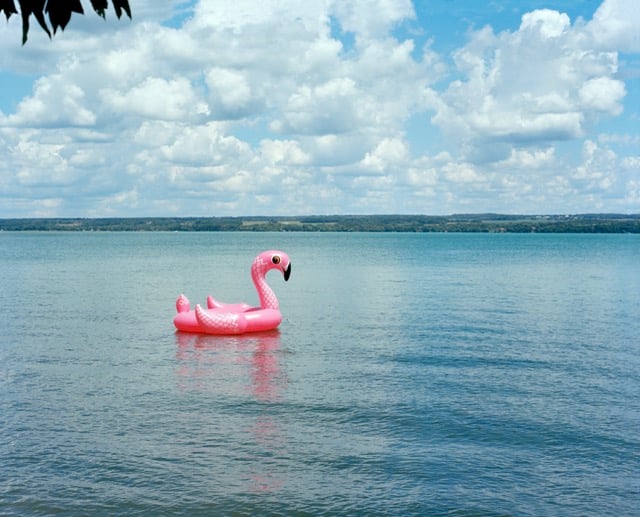
Dana Stirling’s still-life photobook “why am I sad?” explores the interplay between emotions and artistic expression. Her formally composed images, bursting with colour and vibrancy, are about as far away as you can get from stereotypical images of “depression” – and that’s precisely the point.
Born in Jerusalem, Israel, and now residing in Queens, NYC, Stirling has had work exhibited widely and has published a selection of books and zines. I was thrilled to catch up with her to discuss the work.
Jon Stapley: Thanks for talking with us, Dana. How did the “why am i sad?” project start – what kicked it off?
Dana Stirling: In many ways, it started from the very beginning of me making photos. I've always made work centred around this idea of identity, and especially my family connection and my heritage, and struggling to fit in.
Growing up as a person who identifies as an immigrant, and then becoming an actual immigrant here in the United States, these things started to be more on the surface. When I was doing my BA, I was very naive to everything, still exploring and understanding who I was. But it's here in the United States that I found the visual language that I felt comfortable with.
After my MFA, I was really struggling. I wasn't taking a lot of photos. I felt very lost, and I wasn't sure what to do. In 2019 we took a trip to the West Coast; it was my first time, and there was something really magical about the West Coast.
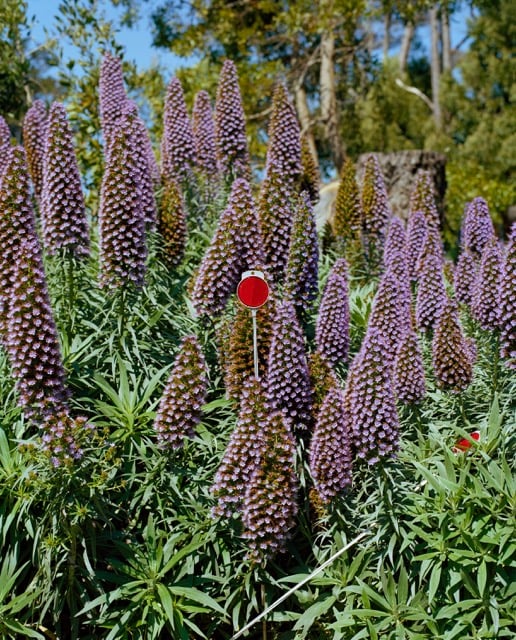
It was the photo of the purple flowers, with the red reflector. I was like: “Stop the car. Stop the car!” I had this compulsion to take that photo.
I have a Mamiya RZ67, so I look down when I take a photo, through the waist-level viewfinder. Looking down, I was like, “This is why I love photography.” Something about that moment reminded me why I started taking photos. And I remember then asking out loud for the first time, “Why am I sad? Why am I always feeling this way?” That was the pivotal moment where things became more concrete, because I was being more honest about it.
JS: Could you talk about the process – how did you approach making this work?
DS: Because I am an immigrant in the United States – well, technically now I'm a citizen, but I still feel like an immigrant – I have a real appreciation for this place. This country is so vast and so unique in its own little quirky way.
It’s hard for me to make photos; I'm a slow maker. Going on these road trips, I'm allowing myself to have a week or ten days to just focus on photography. Being in a place that's unfamiliar makes you look at the world differently; it makes you think about the things you're looking at. You open your eyes.
JS: Does it feel exposing, making work like this? Do you feel a vulnerability?
DS: Oh, absolutely. Especially when I started posting and introducing the work to the world. It did feel like, “Oh, my God, are people going to judge me? Are people going to be afraid to show my work now?” Because it's taboo in a sense, openly talking about depression and mental health. I think it's getting better with time, but it still has a little bit of a stigma.
I grew up in a household that was very closed. Everyone's cordial and polite and friendly, but you don't dig deep and talk about things. I’ve carried that with me my entire life, and I think that's why I've struggled for so many years with this aspect of who I am. This project forced me to open up, and it allowed other people to communicate with me and tell me, “I feel the same way.”
But it is scary. This entire thing is on the internet and lives beyond me. I'm always worried about future employers, gallery people, magazines… how will they interpret it? It is very scary to put yourself out there, but for me, opening up the conversation about it was so important that I was willing to take the chance.
JS: In your accompanying text, a phrase caught my attention: “the relentless pursuit of self-understanding”. Do you think you've got anywhere along the track of self-understanding through this work?
DS: Maybe a small fraction? Every day I feel different, and I'm definitely not the same person I was back in my undergrad, and I'm definitely not the same person I was in high school. As I'm growing up, I'm finding different avenues about myself, for better and for worse.
I think that's why we all make art, right? Even if we make a project that's a documentary about someone else, we're tapping into something that is a part of us. I feel like we always photograph from our perspective and from our universe.
JS: You’ve mentioned the Mamiya camera. This project is shot on film, beautiful Kodak Ektar. Why that medium?
DS: The way that I naturally work is so slow. I've noticed that every time I use a digital camera, I'm very reckless. I don't focus. I'm not looking at the frame and the edge.
The waist-level finder is so beautiful… when I see that image through that window is when I fall in love with it. Sometimes, I even put the camera [on the tripod], I do everything, and then if I don't feel that feeling when I look at the viewfinder, I don't click the shutter.
It’s not that against digital, or I'm a stickler for film. It just works for me. Film has a beautiful tonality to it, and I’ve always found that the colours, specifically of the Ektar film, are perfect for my aesthetic. It's vibrant, but it still has a bit of a pastel to it.
JS: It’s an interesting choice. I feel if you gave someone the title in isolation – “why am I sad?” – and asked them to predict what the images would look like, they'd say gritty, grainy, black & white. But you use these huge, bold colours. Was that a conscious choice, that irony and separation?
DS: Absolutely. I walk the earth with two eyes, right? And I see colour; I don't see black and white. Sadness is a part of my everyday life; it's a part of who I am all the time. It didn't make sense to make work about depression that didn’t correlate to what I experience. I experience life as ups and downs, joy and sadness – all these different emotions, I experience them in colour. I didn't want to run away from that.
I like that it makes people a little uncomfortable to think about the work in this way, with colour. Because, like you said, when we think of melancholy or depression visually, we have this illustration of what sadness would look like – dark shadows, black & white, heavy, grainy. Someone in the corner, an empty room, crying. There's a lot of clichés when we think of depression.
I've had people come and tell me, to criticise the work, that it's not showing depression. Well, I'm not trying to show depression. I'm trying to show my depression, and my depression might look different than other people’s. That's okay. That's the whole conversation.
JS: I think we know from the outset that the titular question is not going to be answered. But do you think your relationship with sadness has changed through making the work?
DS: In many ways, I feel less worried about it. I used to be very anxious about everything, because I felt very isolated. I was trying to forcefully overcome something, trying to be someone who I wasn't. I was trying to fix myself.
Once I let go, I was like, “Okay, this is who I am. This is my struggle. Maybe I’m not like other people. I'm not like other artists. And maybe that's okay.” If people were going to accept me, great – if not, great as well. That lifted a heavy weight off me.
I think it's helped me… not necessarily embrace it [sadness], but more like it just becomes a companion. Instead of being something that's fighting you, now we're walking together side by side. I'm allowing myself to be anxious, and be everything I need to be, but I'm giving myself more grace.
why am I sad? is published by Kehrer Verlag. See more of Dana’s work at danastirling.com.

This article is part of our #ChangeTheImage | Photography as a Therapeutic Tool campaign.
Photography can be much more than a way of documenting the world around us. For many, it can become a way to process experiences, express emotions that are difficult to put into words, and reconnect with ourselves and others. Through making and sharing images, photography can offer a powerful tool for reflection, understanding and healing.
Here at Wex Photo Video, we are constantly reminded that how we choose to capture the world has never mattered more. The way we see — and the way we portray others — holds the power to influence the world around us, from shifting public opinion to inspiring meaningful change. We are reminded once again of the profound importance of documenting the lives, stories, and moments that shape our shared human experience.
About the Author
Jon Stapley is a London-based freelance writer and journalist who covers photography, art and technology. When not writing about cameras, Jon is a keen photographer who captures the world using his Olympus XA2. His creativity extends to works of fiction and other creative writing, all of which can be found on his website www.jonstapley.com
Trending Articles

Sign up for our newsletter today!
- Subscribe for exclusive discounts and special offers
- Receive our monthly content roundups
- Get the latest news and know-how from our experts