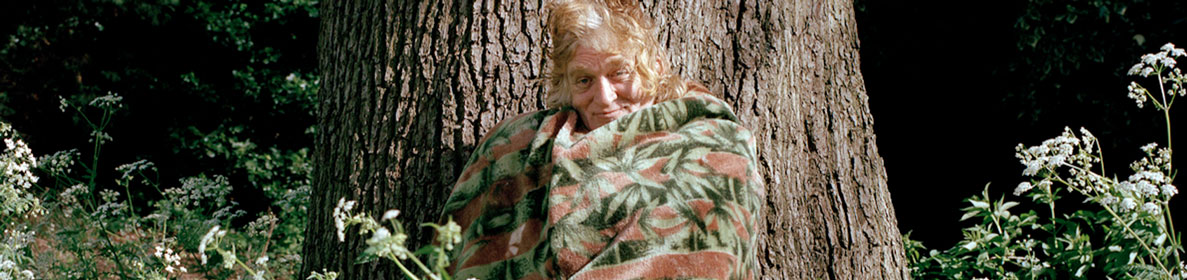
“All the work I’ve done, in a way, has been leading to this work.”
That’s how photographer Louis Quail talks about his seminal project Big Brother. A stunning, limited-edition book published by Dewi Lewis, the book is a photographic portrayal of the life of Louis’ brother, Justin, who lives with schizoaffective disorder.
As well as photography, the book also draws upon Justin’s own drawings and poems, as well as the accumulated detritus of his life such as medical and police reports. It’s a stunningly intimate and absorbing work, and amid the context of shrinking mental health funding and diminishing support in the UK, it is a sad one too.
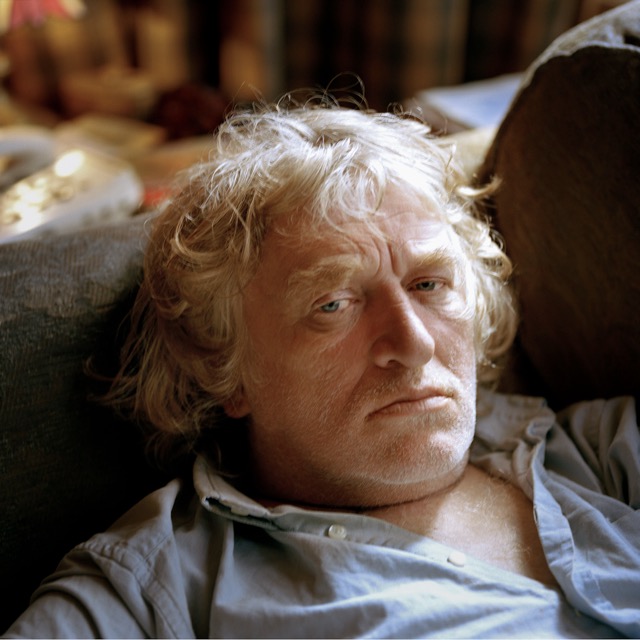
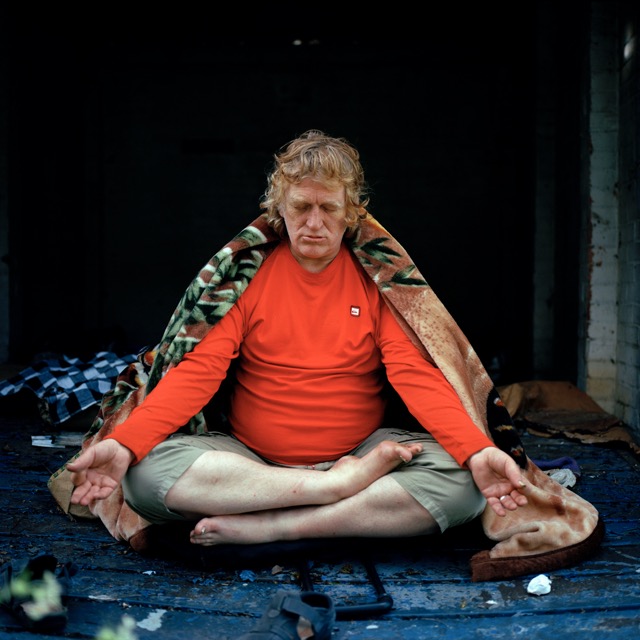
Despite this, there is hope and beauty there too. Louis was keen not to simply paint a grim and maudlin picture of his brother’s life, and one of the things the book does brilliantly is paint a picture of Justin as the complex, multi-faceted individual he is. He may be a man with schizoaffective disorder – but he is also an avid bird-watcher, having kept meticulous records of his sightings for decades. He is in a long-term relationship, deeply committed to his girlfriend Jackie, whom he has been with since 1995.
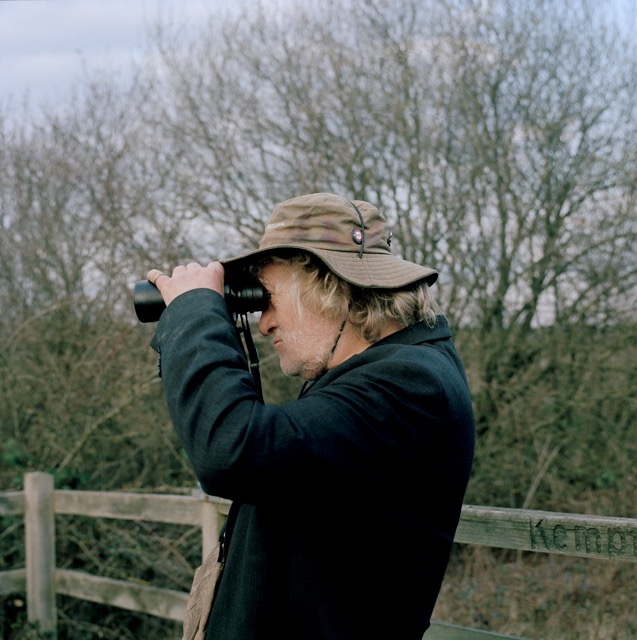
“People tend to see the illness before they see the person.”
One of the key reasons that Louis embarked upon this book was a desire to push back against how Justin was seen by society. Justin has a condition, one that can sometimes make life very challenging for him, but this is only a single facet of who he is as a person. Louis noted that even people who entered Justin’s life with good intentions – doctors, medical professionals, cleaners, social workers – tended to focus on the immediate problem they needed to solve.
“It was very reductive,” Louis says. “So, one of the reasons I made this book was to push back against that very narrow understanding of Justin, and to show the whole person, to celebrate the whole person. Justin's got so much potential: he's creative, he's into poetry, and he's got this amazing hobby, which is bird-watching.”
“The book deals with this idea that Justin is more than his illness. Mental health is part of his life, but it's not all of his life.”
“Whenever an executive decision at government was made, I could see it playing out at street level, in Justin’s life.”
Louis didn’t necessarily set out to make a book that was about the politics of mental health – but politics often has a way of finding us, whether we want it to or not.
“I knew I wanted to push back against a very narrow understanding of Justin, a very reductive understanding. The otherness that he feels when he gets on the bus and someone moves away from him or someone crosses the street to avoid him,” he says.
“But as the project developed, I realised it's actually quite a complicated situation that Justin was in.”
“For example, there’s a picture in the book where Justin's going to his old drop-in center, called the Mereway, and it's closed now – it's been closed for years, because of government cuts and government funding problems. Justin went there with his mum for 23 years – to just lose that facility is devastating.”
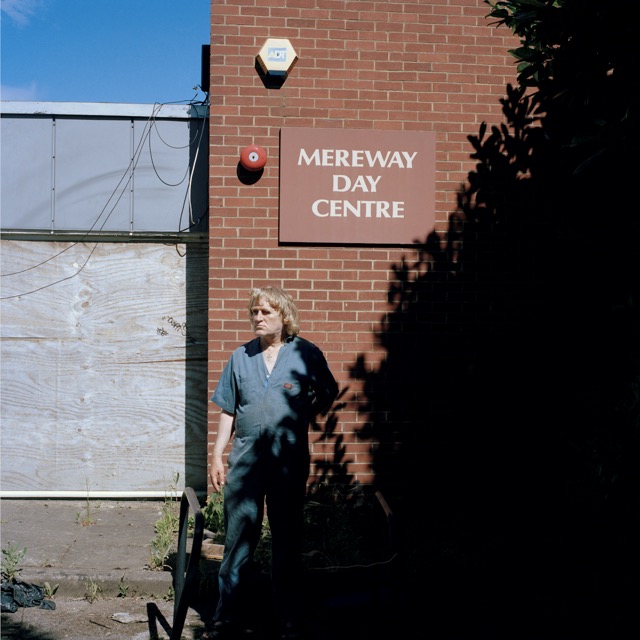
“But people don't really know about that side of it. And the more I made this work, the more I realised just how challenging it was for our society to look after and care for people… the funding and the social issues really started to play out in an obvious way. That was one of the important things that I came across in the making of the book.”
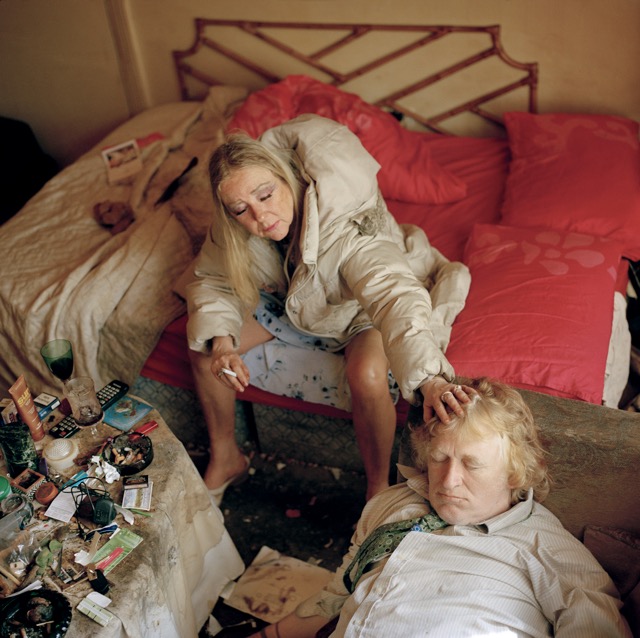
“How does he give consent?”
Over the years the project spanned, Louis’ relationship with Justin changed. The gift of the trust that Justin had placed in him to tell his story was something that Louis placed enormous value on, and it gave him a new way to spend time with his brother. He spent less time doing things for Justin – cleaning his flat, calling social services, picking him up from the police station – and more time doing things with him.
After five years, and three dummy drafts pored over with publisher Dewi Lewis, the book of Big Brother was taking shape. But Louis found himself feeling nervous.
“The closer we get to publication day, the more stressed I become,” he says. “Because I'm really worried about how Justin's going to react. All the way through this, I'm aware there's a big ethical problem here: how does someone with mental-health issues like Justin – which can be very severe, he's been sectioned three times in his life – how does he give consent?”
Louis found himself thinking about his mother – who had also been diagnosed with schizophrenia. Though her story would have been a brilliant one to tell, he had never found himself able to do so – he had lacked the confidence, and had felt unsure about where exactly the boundaries lay between his family and his career.
However, he realised that this was creating a kind of Catch-22 – if nobody wanted to tell the stories of people with schizophrenia (and related disorders) because they weren’t sure where the boundaries lay, then there would never be the level of greater understanding that comes from people’s stories being told.
“I had an opportunity through my understanding of Justin as my brother, and his trust in me,” Louis says. “I knew what would worry him instinctively… Justin very often, for example, talks about the bogey man getting into his flat and stealing things, and he's very often a stream of consciousness. As I was making the book, I could sense what was worrying him and what wasn't worrying him – so I knew that I could navigate my way through that properly.”
“I could tell the story through the optics of the love story.”
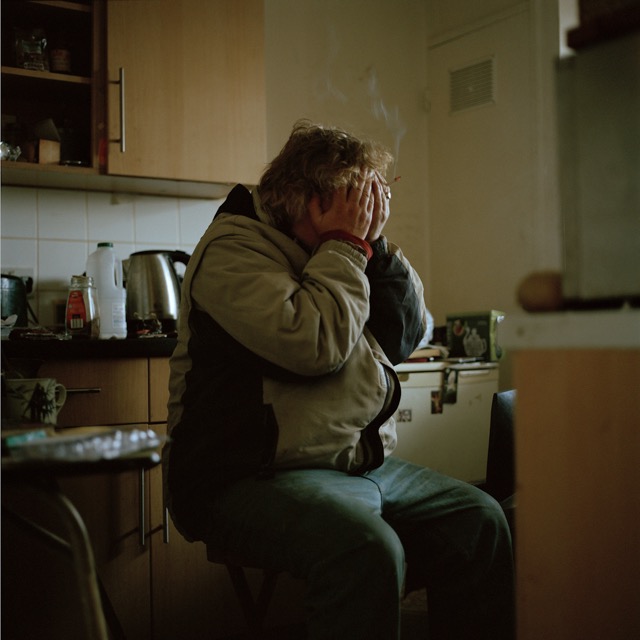
“One of the earliest pictures [in the book] is Justin with his head in his hands, which is a bit of a cliché really,” says Louis. “But the idea behind that is to introduce the illness, and the narrow understanding of schizophrenia, and then to push back against that with a series of surprises.”
One of these surprises – possibly the most shocking for people who don’t know much about schizophrenia – is that Justin has a long-term girlfriend. Jackie has been a huge part of Justin’s life for more than thirty years, and the love story between the two became an integral part of the story.
“What happens halfway through the book, Justin and Jackie start arguing because Justin’s been moved, he’s asked to leave a flat, because he’s making too much noise,” Louis says. “There’s a beautiful poem in the book about that situation – Mrs Neat and Mr Tidy I think it’s called.”
In the book, the love story starts to go wrong. Jackie is forced to call the police whenever the couple have an argument because she’s receiving no support from social services, and Justin is frequently arrested because the police have no other recourse.
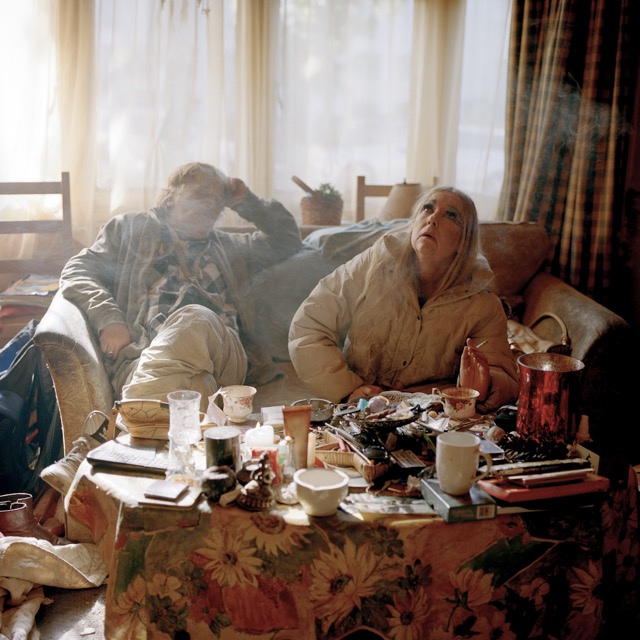
“It's the system, the chaos of the system, and the chaos of Justin and Jackie in conflict. I realised there was a third person in this relationship, and it was the police,” Louis says. “[The book] became: will this relationship survive? With the police who are saying, ‘You're better off without Jackie, mate. They’d much rather they just separated and that in itself is a stigmatising process, [the idea that] they don't deserve to have a relationship because it's too complicated and too problematic… and it's not until the very end of the book you get to see if that relationship survives or not.”
https://www.wexhotovideo.mom/globalassets/blog-images/2026/09-sep/louis-quail/quail_bigbro_4_of_15-medium.jpeg
Stigma and stigmatising are themes that Louis returns to again and again. Schizophrenia and its related disorders are complex things, and it would be trite and inadequate to attempt to sum up a project as audacious as Big Brother in a single pithy line or sentence. But if there is one thing to take away, it’s to remember that complexity. To resist the urge to stigmatise people like Justin as simply and wholly mentally ill – something people might even do in a well-meaning way.
Justin is a complex person. His life is sometimes joyous and sometimes sad. Appreciating him in all of his complexity is necessary for challenging the stigmatisation around people who deal with mental illness. One of the most powerful gestures we can make is to always try to see the person before seeing the illness.
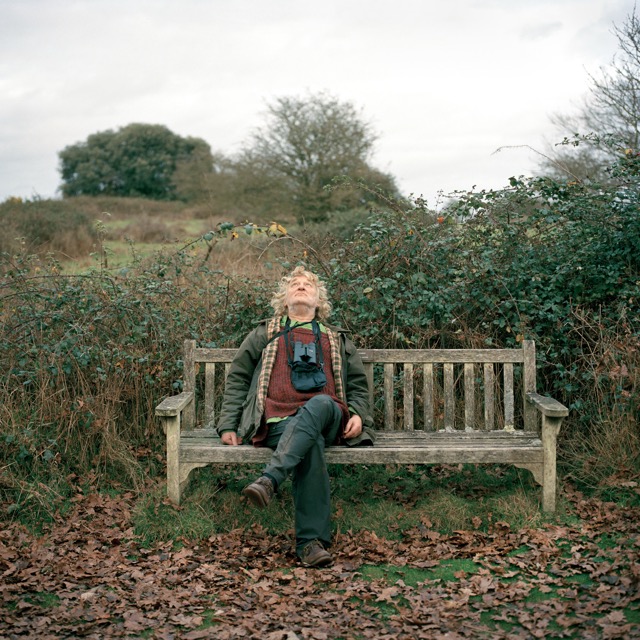
Big Brother is available from louisquail.com.
This article is part of our #ChangeTheImage | Photography as a Therapeutic Tool campaign.
Photography can be much more than a way of documenting the world around us. For many, it can become a way to process experiences, express emotions that are difficult to put into words, and reconnect with ourselves and others. Through making and sharing images, photography can offer a powerful tool for reflection, understanding and healing.
Here at Wex Photo Video, we are constantly reminded that how we choose to capture the world has never mattered more. The way we see — and the way we portray others — holds the power to influence the world around us, from shifting public opinion to inspiring meaningful change. We are reminded once again of the profound importance of documenting the lives, stories, and moments that shape our shared human experience.
About the Author
Jon Stapley is a London-based freelance writer and journalist who covers photography, art and technology. When not writing about cameras, Jon is a keen photographer who captures the world using his Olympus XA2. His creativity extends to works of fiction and other creative writing, all of which can be found on his website www.jonstapley.com
Trending Articles




Sign up for our newsletter today!
- Subscribe for exclusive discounts and special offers
- Receive our monthly content roundups
- Get the latest news and know-how from our experts