If you’ve got £5,000 to spend on a wildlife photography setup, then you’re ready to enter the big leagues. While there are cameras and lenses at levels above this budget, £5,000 is still more than enough to get yourself an absolutely cracking setup with one of the best cameras for wildlife and at least one spectacular lens.
But just because you’ve got a generous budget, that doesn’t mean that it’s going to be easy. Just as if you’re working with smaller budgets, you’ve got to take care to make sure you maximise bang for your buck. It would be perfectly possible to spend £5,000 on a fantastic camera and lens that aren’t that suited to wildlife. So, we teamed up with some experts to provide some guidance.
If you’re working with a smaller budget, we also have expert guides on building a wildlife photography setup for £1,500 and even building a wildlife photography setup for £500. Read on for our tips at a higher budget – and don’t forget to check out our complete rundown of the best lenses for wildlife.
Let’s see what the experts have to say…
Jon Devo – Camera gear expert
Camera: Panasonic Lumix S1 II
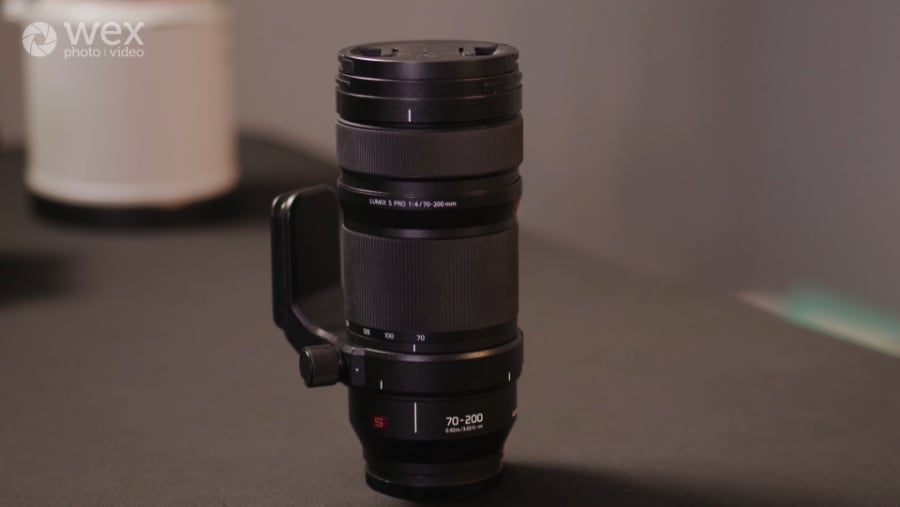
Lenses: Sigma 150-600mm f5-6.3 Sports DG DN OS + Panasonic LUMIX S Pro 70-200mm f4 OIS
Jon Devo is our resident tech expert, a proud camera geek who is a regular fixture on our YouTube channel whenever we need someone who really knows their stuff.
Now that we’ve given him a healthy budget to play with, Jon is very happy – and his pick for wildlife photography on a budget is the Panasonic Lumix S1 II, paired with the Sigma 150-600mm f5-6.3 Sports DG DN OS telephoto zoom for L-mount (since Sigma is part of the L-mount alliance, it produces plenty of lenses for the system).
With a 24.1MP partially stacked sensor, the Lumix S1 II delivers the kind of super-fast readout speeds necessary for stopping fast–moving subjects in their tracks. And that resolution gives you plenty of pixels for cropping and printing.
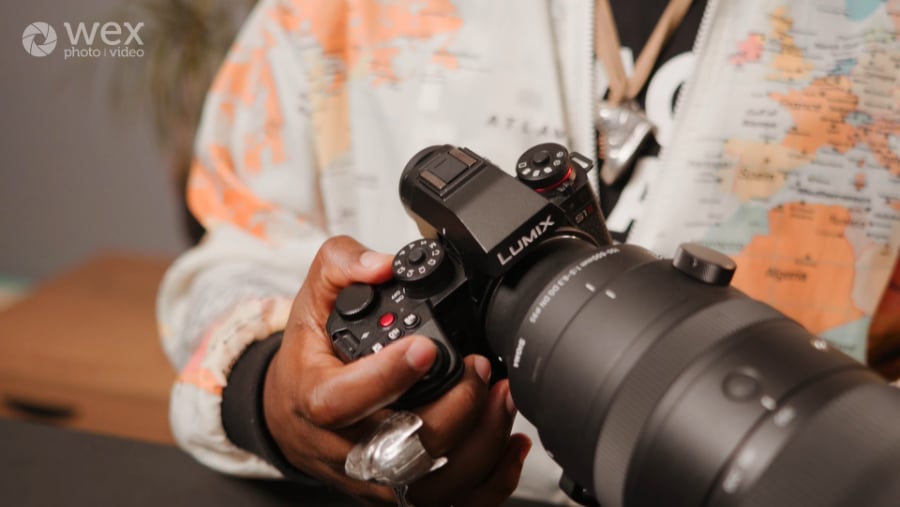
The sensor is full-frame, giving it plenty of light-gathering capability and impressive dynamic range – to the tune of 15 stops. And with a mega-fast burst speed of 70fps, you can be sure of capturing every movement of your subject. There’s even a 1.5sec pre-capture mode, saving the frames from the moment just before you tripped the shutter to maximise your chances of making the shot.
The Lumix S1 II uses a 779-point Hybrid phase-detect AF system, with a sophisticated subject-detection that can specifically identify and lock onto animals and birds. Its ISO range runs from 100 to 51,200, and it’s a dual-gain system, meaning that it switches to another circuit at high sensitivities to deliver cleaner images at high sensitivities. This is great for wildlife at dawn and dusk, allowing you to keep using fast shutter speeds to freeze action even as the sun gets low.
The camera itself is a big full-frame beast, constructed from magnesium alloy and full weather-sealed for outdoor shooting. It has a solid grip and good heft to it, with a large electronic viewfinder that has – and this is one of Jon’s favourite features – a circular eyecup.
The native L-mount 150-600mm lens will give you a broad, generous reach for lots of different subjects. However, Jon points out that the £5,000 budget should also give you room to fit in the Lumix S Pro 70-200mm F4 OIS lens. Great for closer subjects, this lens is also lighter than the big zoom, and gives you the advantage of a wider constant aperture – another strong asset for low light.
Drawbacks?
While a 24.1MP resolution is realistically fine for most purposes, it is lower than many comparable mirrorless cameras. If you’d prefer more pixels, Jon recommends the Sony A7 V as an alternative, though you don’t get quite the same blistering speeds.
Tom Mason – Pro wildlife photographer
Camera: Nikon Z8
Lens: Nikon Z 180-600mm F5.6-6.3 VR or Nikon Z 400mm f4.5 VR S
Tom Mason is one of our most trusted experts on all things wildlife photography. He has been capturing images of the natural world since he was very young, and his images have been published extensively and have won multiple awards.
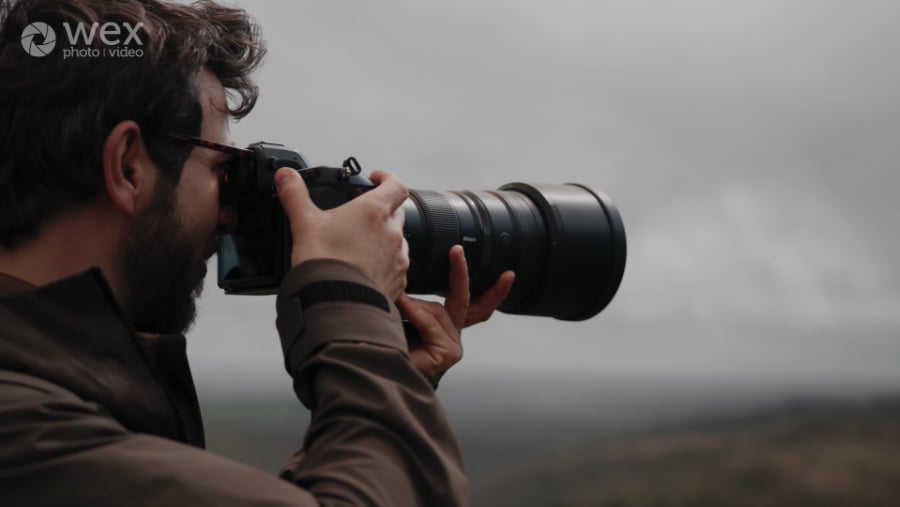
His camera pick for the £5,000 budget is the Nikon Z8. Essentially a slightly slimmed-down version of the flagship Z9, this is a pro camera at a price that’s under the pro level. With a 45MP sensor, it offers bags of resolution for cropping and printing your images. Its 20fps burst mode is more than capable of getting the job done, as is its 493-point AF system with subject recognition.
ISO performance is another area where the Nikon Z8 excels; it allows you to push to higher sensitivities without compromising image quality, and offers a generous range of 32 to 102,400.
Tom praises the professional handling of the Nikon Z8. With lots of assignable buttons, it’s the kind of camera you can set up to work exactly the way you want it, allowing you to control all the key settings without having to take your eye off the viewfinder. Its battery life is also excellent – not quite at the level of the Z9, but still very respectable.
The 180-600mm lens is a great all-rounder that gives you broad reach and great flexibility for a variety of subjects. As Tom points out, its maximum aperture range of F5.6-6.3 is not the brightest, but still does a solid job, especially when paired with a modern sensor that can handle high sensitivities.
As an alternative if you’d prefer a bigger aperture, Tom recommends Nikon’s Z 400mm F4.5 VR S. As a prime, its optics are superior, delivering improved image quality. However, the key thing is that wider aperture, which is great for overcast and dim conditions, helping you keep your shutter speed high. This lens is also lighter than the big zoom, which is handy if you’re taking your kit on a hike.
Drawbacks?
The lower aperture of the long zoom lens can make it more of a challenge to acquire focus. But again, if that’s a deal-breaker, go with the 400mm. A prime can be trickier to use and more limiting, but once you get your head around it, the improved image quality really does make a difference. As Tom says, there’s a reason all the pros are using primes!
All used equipment discussed is subject to stock availability, condition, and pricing at the time.
About the Author
Jon Stapley is a London-based freelance writer and journalist who covers photography, art and technology. When not writing about cameras, Jon is a keen photographer who captures the world using his Olympus XA2. His creativity extends to works of fiction and other creative writing, all of which can be found on his website www.jonstapley.com
Trending Articles
Sign up for our newsletter today!
- Subscribe for exclusive discounts and special offers
- Receive our monthly content roundups
- Get the latest news and know-how from our experts