With £10,000 to spend on wildlife photography kit, you’re looking at true professional territory. This is where we get to play with all the best cameras for wildlife, with ultra-fast burst rates and ultra-sophisticated autofocus systems. Pair a camera like that with a scintillatingly sharp telephoto lens, and you’ll be nailing the kinds of shots
Still, £10,000 doesn’t just magically translate into top-end wildlife kit – you have to know what to buy. That’s where our experts come in, as we’ve consulted two industry professionals to get their take on how best to spend this budget on a complete setup for wildlife photography.
For smaller budgets, we also have guides to building a wildlife photography setup for £1,500 and building a wildlife photography setup for £500. But read on to get our experts’ takes on how best to spend a pro-level wildlife budget – and check out our dedicated guide to the best lenses for wildlife, too.
Jon Devo – Camera gear expert
Camera: Sony A1 II
Lenses: Sony FE 300mm f2.8 OSS GM and Sony FE 200-600mm f5.6-6.3 G OSS
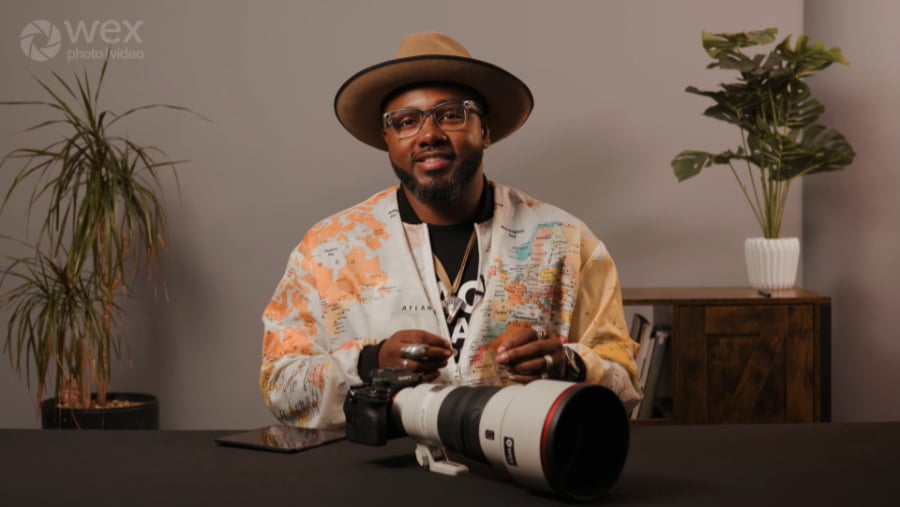
Jon Devo is our resident expert on all things photo and video gear, and one of his favourite things to do is sniff out a bargain on great kit. His chosen setup will require you to shop used in order to stay within budget, but if you do so, you should be able to snag the Sony A1 II full-frame mirrorless camera, along with a Sony FE 300mm f2.8 OSS GM lens and a Sony FE 200-600mm f5.6-6.3 G OSS.
The Sony A1 II is a high-end professional all-rounder that’s fantastic for wildlife. With a 50.1MP full-frame stacked BSI sensor, it delivers fast speeds with no rolling shutter. Its 759-point phase-detect autofocus system is incredibly fast and accurate, additionally benefiting from AI-powered subject-detection that works on birds and animals, and the A1 II shoots at a muscular burst rate of 30fps.
The A1 II also offers a broad extended ISO range of 50–102,400, and a 5-axis in-body image stabilisation system, both of which make it easier to get sharp and dynamic images in low light. You can push up those sensitivities surprisingly high and still come away with great-looking shots.
Another much-praised feature of the A1 II is its gorgeous electronic viewfinder, which is big, beautiful and high-resolution, with 9.44m dots. It offers simply superb clarity for viewing your wildlife subjects. Handing-wise, the A1 II is reasonably compact, but has a solid grip, and as Jon notes, it balances beautifully with longer lenses.
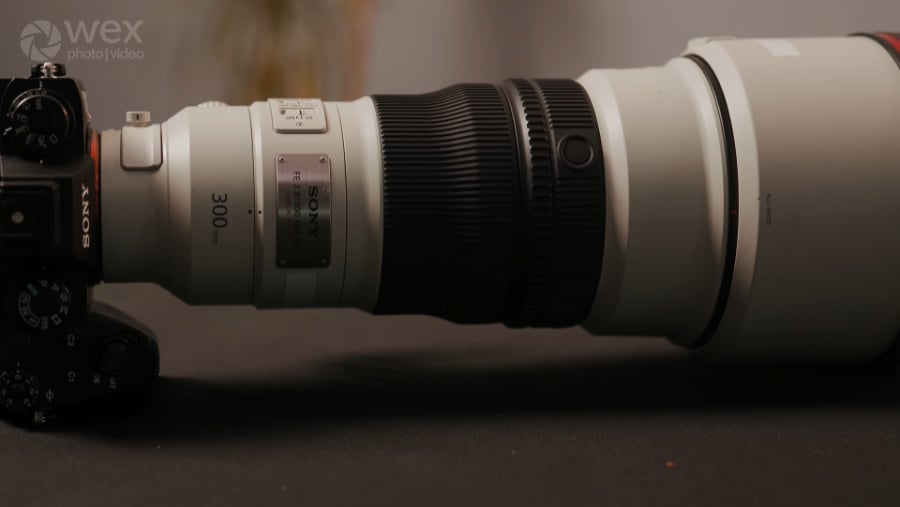
On that subject – the FE 300mm f2.8 OSS GM is a superb prime for dealing with closer subjects, its large F2.8 aperture giving you incredible latitude in low light, as well as enabling that shallow depth-of-field crispness. The FE 200-600mm f5.6-6.3 G OSS, Jon explains, is more for when you’re hunting for a subject – perhaps you’re not quite sure where they’re going to be, or they are moving unpredictably. That huge zoom range just gives you loads of flexibility. Both lenses also have Sony’s “OSS” designation, meaning they are optically stabilised for easier handholding.
Alternatives?
If you want a slightly cheaper camera with similar capabilities, Jon recommends considering the Canon EOS R3 (which has since been superseded by the EOS R1). It’s still blisteringly fast, and you get the amazing Canon RF and EF lens ranges to play with.
For a slightly cheaper camera, Canon EOS R3 - still fast and you get the amazing canon lens range
Tom Mason – Pro wildlife photographer
Camera: Nikon Z9
Lens: Nikon Z 600mm f6.3 VR S
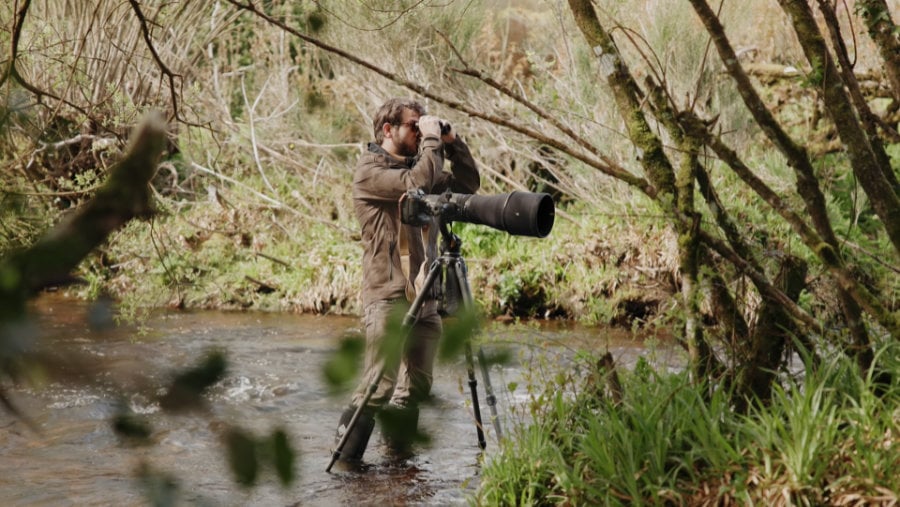
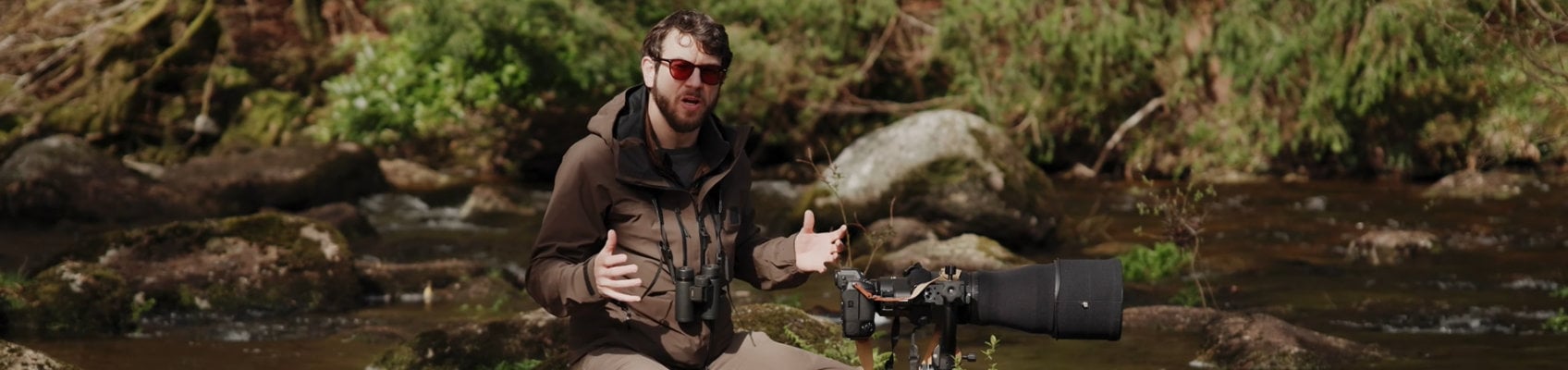
For professional wildlife photographer Tom Mason, picking out a kit in the £10,000 bracket is easy – as it’s the setup that he personally uses. For the majority of his wildlife photography, Tom uses a Nikon Z9 mirrorless camera, paired with a 600mm telephoto. Tom uses the Nikon Z 600mm f4 TC VR S, which unfortunately is beyond our budget, so his recommendation for the £10,000 buyer is the Nikon Z 600mm f6.3 VR S.
The Nikon Z9 is a tank. Equipped with a 45MP full-frame sensor, it’s capable of producing images at the level required to produce big prints, for commercial work, and for cropping in to get a little closer to an elusive subject. The 493-point autofocus system comes with sophisticated AI-powered subject recognition to ensure you always bag the shot, and this combines with the 20fps burst mode. The Z9 also has a broad ISO range, allowing you to keep on shooting in low light, pushing the sensitivity up and still getting useable images.
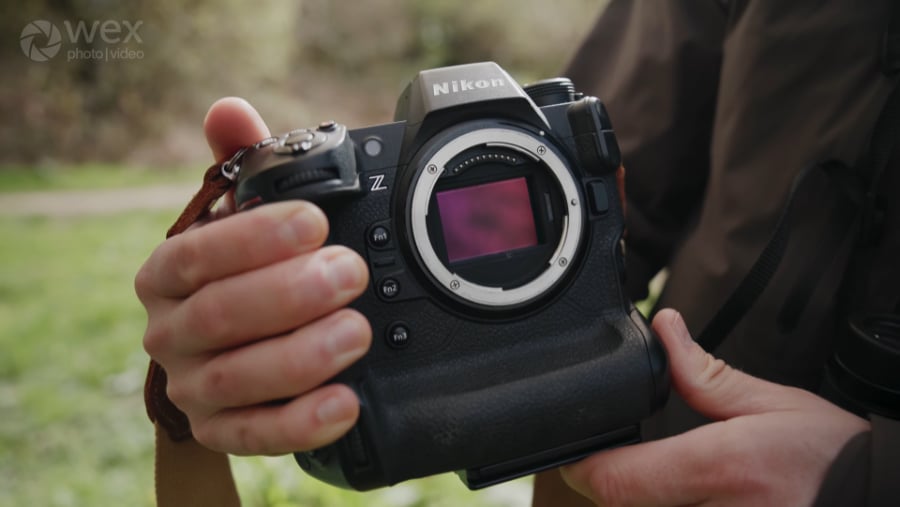
Where it really excels for Tom, however, is in the ergonomics. The Z9’s big build with the built-in battery grip just handles brilliantly, and its ergonomics make it easy for the user to switch from landscape to portrait orientation and back. Dual CFexpress slots mean you always have the card speed and capacity to keep up with your shooting.
Ultimately, it’s just a proper tool to work in outdoor conditions. The key to the Z9’s appeal, for Tom, is its rugged survivability. When he’s out shooting in the elements, it’s just going to work and keep working.
A 600mm prime lens makes for the ideal pairing. It gives you plenty of reach for elusive subjects like small birds, allowing you to fill the frame while maintaining a large working distance. The compression of the telephoto combined with a relatively large aperture also gives you a brilliantly distinctive look that you just can’t get anywhere else – clean images with that dynamic pop.
Drawbacks?
A prime is always going to be restrictive. It requires you think intelligently about your positioning, and to ensure that you are in exactly the right spot to capture frame-filling images of your subject. But as Tom points out, this is not necessarily a bad thing! It requires more work, but in the long run, it’ll make you a better wildlife photographer.
All used equipment discussed is subject to stock availability, condition, and pricing at the time.
Watch the full video here:
About the Author
Jon Stapley is a London-based freelance writer and journalist who covers photography, art and technology. When not writing about cameras, Jon is a keen photographer who captures the world using his Olympus XA2. His creativity extends to works of fiction and other creative writing, all of which can be found on his website www.jonstapley.com
Sign up for our newsletter today!
- Subscribe for exclusive discounts and special offers
- Receive our monthly content roundups
- Get the latest news and know-how from our experts