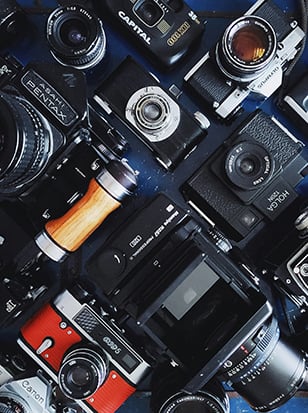
While the best DSLR cameras are no longer the top dogs of the photography world, these durable, long-lasting and capable cameras still have plenty of fans. A good old DSLR can be a photographic companion that lasts a lifetime, and even though most manufacturers are concentrating on their mirrorless ranges, the few DSLRs that you can still buy new represent excellent value for money.
A DSLR is a “Digital Single-Lens Reflex” camera, built on the same basic design as the film SLRs of old – DSLRs use a mirror system that allows them to field an optical viewfinder. They also tend to be built tough, with professional models having tank-like bodies that can stand up to some serious punishment, and the fact that they don't have to power an electronic viewfinder or an always-on LCD screen means they tend to have impressive battery life.
The question is, therefore, which is the best DSLR camera to buy? Nikon, Canon or Pentax? All three offer great, rugged DSLRs with enormous lens ranges, including plenty of good-value options for those on a budget. Here, we run through the best DSLRs you can buy from all three manufacturers.
Quick Navigation
Our top picks

Pros:
- Highly affordable price tag
- Lightweight and easy to use
- 24.1MP gives plenty of room for printing
Cons:
- Only 3fps burst shooting
- Fairly basic autofocus system
The EOS 2000D is one of the most affordable DSLRs around currently. Given this fact, you might expect it to be somewhat bereft of features. Not so! This is a well-equipped camera that provides enough of a jump in quality from a smartphone to be worth the investment. As well as access to the impressive stable of EF lenses, you also get a 24MP APS-C sensor that’ll capture images far more detailed than any phone.
Creative Auto mode, Creative Filters and Scene Intelligent Auto modes help users make the most of the EOS 2000D’s capabilities without getting bogged down in settings. There’s also Full HD video, which comes equipped with Video Snapshot mode to make easy, shareable highlights from your day. It’s easy to use the Canon Camera Connect app for Android and iOS to send images straight to your phone or other smart device, and have your creations ready to share instantly.
The version we’ve picked out also comes bundled with an 18-55mm IS II Lens, a useful standard zoom that produces reliably sharp and vibrant images in all different shooting situations. Like the 2000D itself, the lens is perfect for the novice photographer, but provides tremendous room to grow.

Pros:
- Smart hybrid autofocus
- Uncropped 4K UHD video
- Dual card slots
Cons:
- No built-in stabilisation
- Somewhat big and hefty
Nikon’s exemplary hybrid DSLR takes its cues from mirrorless cameras to deliver a superb shooting experience for both photography and video. Given that more and more content creators are dipping their toes into stills and video these days, cameras need to keep up. The Nikon D780 is a fantastic example of how the humble DSLR can be retooled to do just that – as well as producing sublime stills, it shoots 4K UHD footage at up to 30p with zero crop factor. In Live View, using the LCD screen, the D780 really comes into its own, with a 273-point Hybrid-AF system that is simply class-leading among DSLRs.
With dual SD card slots, a water-resistant body and an ISO range expandable to 204,800, the Nikon D780 is without a doubt a sublime professional tool and one of the best DSLRs you can buy right now. Brilliant for video and superb for stills, this is a camera that will suit any serious user.

Pros:
- Comprehensive weather sealing
- Effective in-body stabilisation
- Generous 36MP resolution
Cons:
- Fewer lens choices than Canon/Nikon
The successor to Ricoh’s first ever full-frame Pentax DSLR, the Pentax K-1 Mark II is a beauty to behold and a joy to use. Robust and weather-sealed, the K-1 Mark II brings a new pixel-shift mode that allows you to create a super-high-resolution image using the built-in image stabilisation system to combine four files into one. It keeps plenty of features from the well-received K-1 as well, including the 36MP full-frame CMOS sensor, the 33-point AF system, the unique cross-tilt LCD screen, the built-in astrotracer for night photography and more.
While Pentaxians don’t have as many lenses to choose from as users of Canon EF or Nikon F cameras, there are still a fair few options for Pentax K-mount – including legacy lenses from the days of analogue SLRs. Bear in mind that not all of them will have the same level of comprehensive weatherproofing as the K-1 Mark II. In newer lenses, look for an “AW” acronym in the lens name – this stands for “All Weather”.

Pros:
- Beast of a camera that can shoot basically anything
- Big battery life
- 4K video
Cons:
- Big and heavy
- Professional price
One of the best-loved workhorse cameras around, rated by enthusiasts and professionals alike – there are several high-resolution DSLRs on the market, but none of those quite beat the Nikon D850 when it comes to versatility. Though it packs a 45MP sensor, this device is far more than just a megapixel monster. The D850 does a fantastic job of sticking with moving subjects, thanks to its brilliant Multi-CAM 20K AF sensor module and 153-point AF system, which operates down to -4EV, and includes 99 cross-type and 15 sensors that support f/8.
Pair this with a 9fps burst mode — and not forgetting that superior resolution — and the D850 can photograph just about anything. A touch-screen display, Wi-Fi, Bluetooth and a massive 1,840-shot battery life all only add to this versatile camera’s appeal.
The Nikon D850 also shoots 4K UHD 30p video using the full width of its sensor, so hybrid content creators are well catered for. It's possible to capture stunning 4K time-lapses in camera, or even amazing high-res 8K time-lapse sequences. The D850 is simply a camera that does everything, and one of the best DSLRs ever made.

Pros:
- Speedy 20fps shooting
- Robust, professional, weather-sealed body
- Deep-learning autofocus
- 5.5K RAW video
Cons:
- Professional price
- Outclassed by pro mirrorless cameras
The Canon EOS-1D X Mark III is Canon's last workhorse professional DSLR. Designed for sports shooting and photojournalism, it's a rugged body that can deliver up to 20fps of continuous shooting, aided by deep-learning autofocus that is capable of intelligently recognising faces even when they are obscured (e.g. by a helmet or goggles).
With Gigabyte Ethernet and USB 3.1 Gen 2 connectivity, the EOS-1D X Mark III is a camera that's equipped for the daily realities of fast-paced professional photography. Its newly expanded ISO sensitivity range runs up to 102,400, expandable to 819,200, making this a highly capable camera in low light. It has dual CFexpress card slots, meaning its storage media will be able to keep up with high-speed shooting and 5.5K RAW video
The EOS-1D Mark III is a brilliant professional DSLR. One of the best ever made. However, in the six years since its release it has been significntly outclassed by the pro models in Canon's mirrorless range, such as the EOS R1, which comes at the same price and boasts next-gen features like Action Priority for capturing crucial moments. Unless you simply have to use a DSLR, the EOS R1 is the superior choice, but the EOS-1D X Mark III remains an excellent camera on its own terms.
FAQs
What is a DSLR camera?
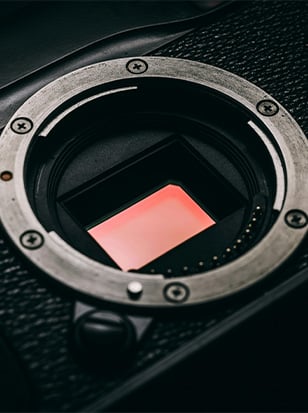
A DSLR (Digital Single-Lens Reflex) camera is a type of digital camera that uses a mirror mechanism to reflect light from the lens up into an optical viewfinder. This allows you to see exactly what will be captured through the lens.
How does a DSLR camera work?
The mirror mechanism inside reflects light from the lens up into an optical viewfinder. When the shutter button is pressed, the mirror flips up, allowing light to hit the camera's image sensor, capturing the image.
What are the advantages of using a DSLR camera?
DSLR cameras offer several advantages over other types of cameras such as compact cameras, including superior image quality, interchangeable lenses, manual controls, and an optical viewfinder.
What should I consider when buying a DSLR camera?
Before buying a DSLR camera you’ll need to think about serval factors such as sensor size, megapixels, lens compatibility, features, and budget. But the best place to start is to consider what you want to take photos of. Once you know this, it’ll make your decision much easier.
Are DSLR or mirrorless cameras better?
It all depends on individual preferences and shooting needs. DSLR cameras offer optical viewfinders and a wide range of compatible lenses, while mirrorless cameras are typically lighter, more compact, and offer advanced autofocus systems and electronic viewfinders. They both have strengths and weaknesses. It’s best to try out both to get a feel for what you like.
How do we decide?
Our in-house photography specialists, store staff, and industry partners work together to review our buying guides and advice articles. We also monitor emerging trends and listen closely to customer feedback, ensuring our recommendations stay current and relevant to what photographers and filmmakers are actually looking for.
By carefully curating the products we recommend, our guides are designed to offer clear, trustworthy advice that helps customers choose the right kit with confidence.
If you would like further advice, our contact centre team are here to help. You can also reach us via email or social media. And remember, if you purchase based on our recommendations, your order is covered by our full returns policy.
The Wex Blog



Sign up for our newsletter today!
- Subscribe for exclusive discounts and special offers
- Receive our monthly content roundups
- Get the latest news and know-how from our experts